


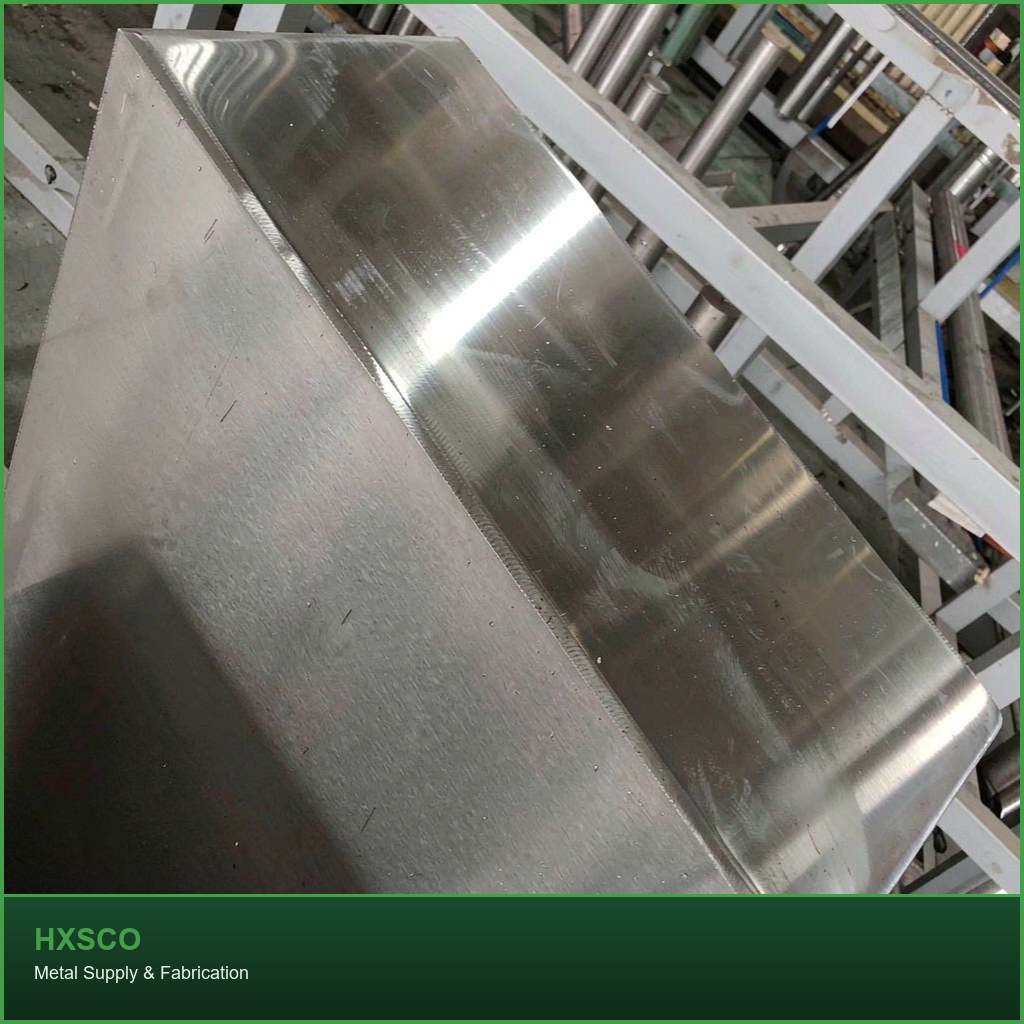
Short answer: HXSCO supplies explosion-bonded and roll-bonded clad plate — a thin corrosion-resistant or conductive layer metallurgically welded to a low-cost backing — so you get the performance of titanium, stainless, nickel alloy or copper at a fraction of solid cost. Clad plate is the workhorse for chemical vessels, desalination and seawater systems, heat exchangers and power-transition joints where one face must resist corrosion and the other carry load or conduct.
At a Glance
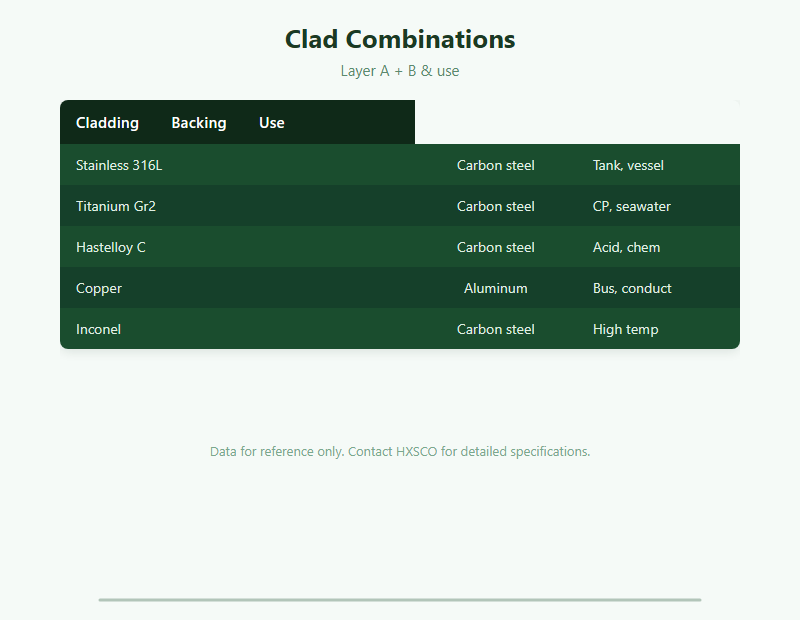
Our Clad Plate Range
We bond stainless, Titanium Supplier, Nickel Alloy Supplier, Copper Supplier and Refractory Metals Supplier layers onto carbon or alloy backing; context beside our Stainless Steel Supplier and Aluminum Supplier lines.
Bonding & Quality
Cladding is produced by Metal Powder Metallurgy Guide and explosive/roll bonding, then inspected by Metal Ndt Guide and documented per Mill Test Certificate Guide; protected under Metal Corrosion Monitoring Guide and How To Prevent Metal Rust.
Applications & Supply
Used in Metal Heat Exchanger Materials Guide and Metal Cladding Facades; HXSCO supplies clad plate to your drawing with bond-shear and UT reports.
Get a Quote
Tell HXSCO your requirements and we will respond with a competitive quote and lead time.
Frequently Asked Questions
A thin corrosion/resistant layer metallurgically bonded to a cheaper backing.
Explosion (explosive) bonding or roll bonding under heat and pressure.
You get the alloy face at a fraction of the solid-alloy cost.
Stainless/carbon, Ti/carbon, Hastelloy/carbon, Cu/Al, Inconel/carbon.
HXSCO supplies clad plate with bond-shear and UT inspection reports.
Source Clad Plate from HXSCO
HXSCO supplies explosion and roll-bonded clad plate — stainless, titanium, nickel alloy and copper on carbon or alloy backing — with bond and UT certificates. Send your combination and quantity for a quote.