


Short answer: Stainless fasteners trade some strength for corrosion resistance: 304 (A2) suits indoor and mild duty while 316 (A4) handles marine and chemical service, with supply from our Bolts and Nuts Supplier and Stainless Steel Supplier pages and the grade system in our Fastener Grade Guide.
At a Glance
Why Stainless
A chromium oxide layer stops rust, so stainless fasteners last where carbon steel would corrode, with base grades in our Stainless Steel Supplier page.
304 vs 316
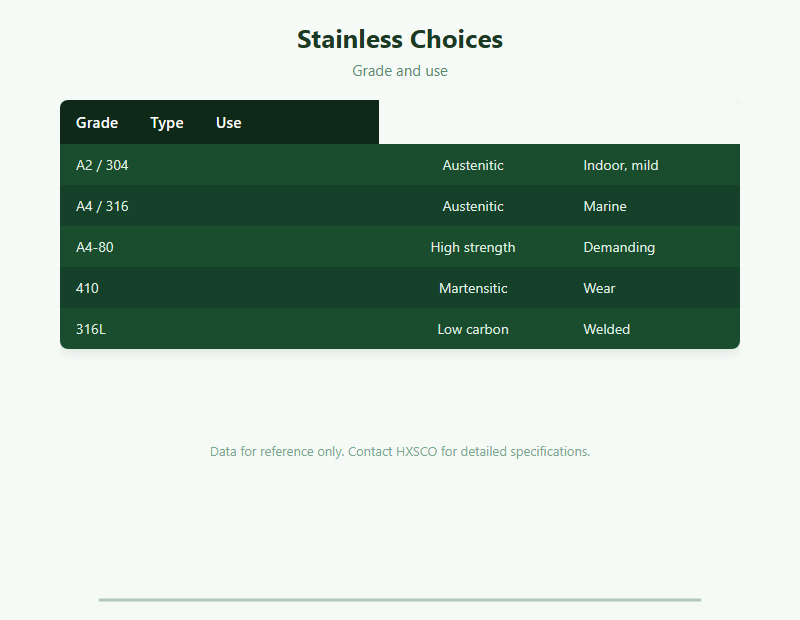
304 (A2) covers most indoor and architectural use while 316 (A4) adds molybdenum for salt and chemical resistance, with the buyers view in our Bolt Buyers Guide.
Strength and Specials
A4-80 lifts strength for demanding joints, 410 martensitic resists wear and 316L suits welded assemblies, with the grade detail in our Fastener Grade Guide.
Avoiding Galling and Quality
Use proper lubrication and avoid over-tightening stainless to limit galling; verify lots with our Quality Inspection Guide and documents per our Mill Test Certificate Guide.
Get a Quote
Tell HXSCO your requirements and we will respond with a competitive quote and lead time.
Frequently Asked Questions
316 (A4) for coastal and chemical.
Lower than 12.9 carbon but enough for most.
Thread seizure from friction and heat.
A4 stainless at 800 MPa tensile.
Yes – MTC with analysis.
Get a Stainless Fastener Quote
HXSCO supplies stainless fasteners in A2, A4, A4-80 and 316L with MTC. Send grade, size and quantity for a quote.