


Short answer: Stress corrosion cracking is a sudden, brittle failure of a metal under sustained tensile stress in a specific corrosive environment; prevent it by lowering residual and applied stress, controlling the environment (chlorides, caustic), and selecting alloys and tempers less susceptible to the service medium.
At a Glance
The Three Requirements
SCC needs a susceptible alloy, sustained tensile stress (residual from forming or applied load), and a specific environment. It is distinct from general corrosion and fatigue — covered separately in our Pitting Guide and Galvanic Guide. Alloy behaviour is in our Steel Grade Chart.
Where It Strikes
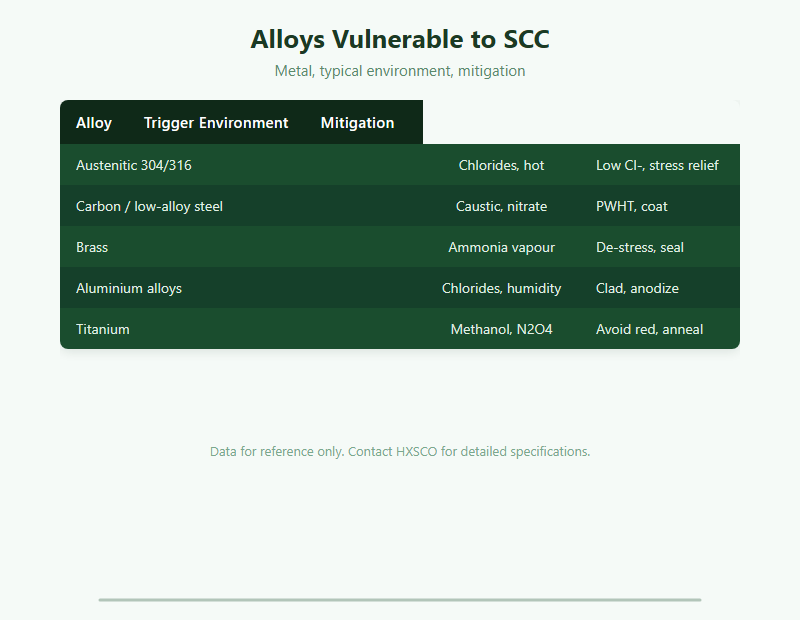
Austenitic stainless cracks in hot chlorides, carbon steel in caustic or nitrate, brass in ammonia, aluminium in chloride humidity, and titanium in methanol. Heat treatment and weld stress are reviewed in our Heat Treatment Guide and Stainless Supplier.
Detection and Inspection
SCC starts as fine surface cracks and is found by dye penetrant, eddy current or radiographic methods described in our Penetrant Testing Guide and Radiographic Guide; surface finish matters per Surface Roughness Ra Guide.
Prevention
Relieve welding and forming stresses (PWHT), control chloride and caustic levels, apply protective coatings, and choose duplex or lower-susceptibility grades. Coating and passivation are detailed in our Metal Surface Treatment Guide and Passivation Guide.
Get a Quote
Tell HXSCO your requirements and we will respond with a competitive quote and lead time.
Frequently Asked Questions
Sustained tensile stress plus a susceptible alloy in a specific corrosive environment.
Austenitic 304 and 316 in hot chlorides — duplex resists far better.
No — a specific environment is required alongside the stress.
Dye penetrant, eddy current or radiographic inspection of stressed zones.
Stress relief (PWHT), lower chlorides, and resistant grades or coatings.
Avoid SCC Failures with HXSCO Stock
HXSCO supplies SCC-resistant duplex and low-susceptibility grades with mill cert and stress-relief options. Send your service environment for a quote.