



Short answer: Shot peening fires small round media at a metal surface to create a layer of compressive residual stress that delays crack initiation, raising fatigue strength and resistance to stress corrosion cracking; it is controlled by Almen intensity, coverage, media size and hardness.
At a Glance
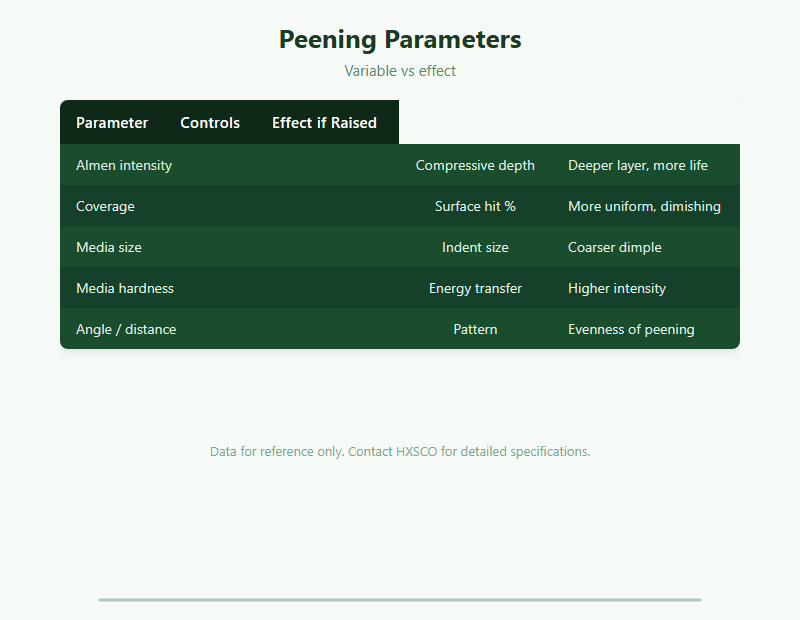
Why Peening Adds Life
The compressive layer counters the tensile stresses that start fatigue and SCC cracks, so peened parts survive far longer. It is a surface process like those in our Metal Surface Treatment Guide and complements Heat Treatment. SCC background in our SCC Guide.
Almen Intensity
Intensity is measured by the arc height a standard Almen strip peens to (A, C or N scale); it sets how deep the compressive layer goes. Control and tolerances relate to our Tolerances Fits Guide; surface before/after per Surface Roughness Ra Guide.
Coverage and Media
Coverage (often 98%+) ensures the whole surface is hit; media size and hardness set the dimple and energy. Over-peening can damage the part, so process windows are documented on our Mill Test Certificate Guide.
Typical Applications
Gears, springs, turbine blades, weld toes and fasteners use peening — see our Fastener Grades Guide and Bolt Fastening Guide. It is often paired with coating in our Powder Coating Guide.
Get a Quote
Tell HXSCO your requirements and we will respond with a competitive quote and lead time.
Frequently Asked Questions
Adds a compressive surface layer that boosts fatigue life.
Arc height a test strip peens to — sets compressive depth.
Yes — it also improves stress-corrosion-cracking resistance.
Yes — too much can damage or distort the part.
Round steel, glass or ceramic shot of set size and hardness.
Supply Peening-Ready Metal from HXSCO
HXSCO supplies fatigue-critical steels and can advise peening and finish for your part. Send your process and standard for a quote.