


Short answer: A metal quote is the base exchange price plus an alloy premium, plus charges for form, tolerance and logistics, so the biggest savings come from specifying only what the job truly needs and buying near-net shapes in standard sizes.
At a Glance
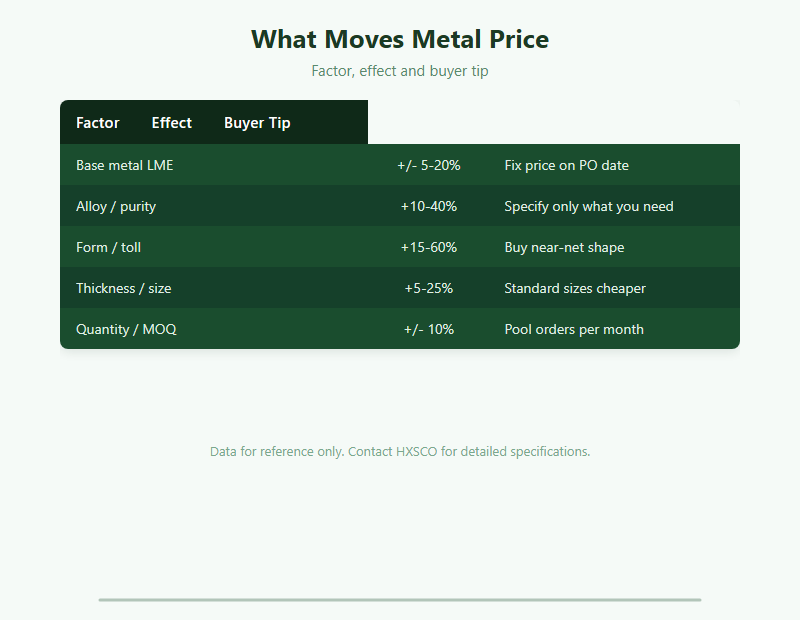
The Base Price Is Only the Start
The published exchange price for the base metal sets the floor, then alloying, processing and delivery stack on top; the commercial framing is in our How to Choose a Metal Supplier and Incoterms Guide.
Alloy and Purity Premium
Nickel, copper and specialty elements add a real premium, so over-specifying alloy wastes money; compare in our Copper vs Stainless and Beryllium Copper Supplier pages.
Form, Tolerance and Toll
Plate, bar, drawn wire and precision-cut parts each carry a conversion charge; tighter tolerance costs more, covered in our Tolerances Guide and Surface Treatment Guide.
Logistics and Terms
Incoterms, packing and lead time move the landed cost as much as the metal itself; see our Export Packing Guide and Incoterms Guide.
How to Get a Fair Quote
Send a clear specification, fix the price basis, and pool volume where you can; our Supplier Guide and Mill Test Certificate Guide list what to include.
Get a Quote
Tell HXSCO your requirements and we will respond with a competitive quote and lead time.
Frequently Asked Questions
The base metal exchange price, which can move 5-20 percent over a quote window.
Yes, nickel and copper additions add 10-40 percent; specify only what you need.
Each conversion step (rolling, drawing, cutting) adds toll and scrap cost.
They decide who pays freight and insurance, changing landed cost.
Fix the price basis, buy near-net shapes and standard sizes, and pool volume.
Get a Transparent Quote from HXSCO
HXSCO quotes metal against a clear specification with transparent alloy and conversion charges. Send your RFQ for a competitive quote.