


Short answer: Copper and stainless steel are both corrosion-resistant, but they solve different problems. Copper wins on electrical and thermal conductivity and antimicrobial surfaces; stainless steel wins on strength, stiffness, and cost stability for structural and hygienic duty. Choose copper for conduction and plumbing; choose stainless for structure, food, and outdoor exposure.
At a Glance
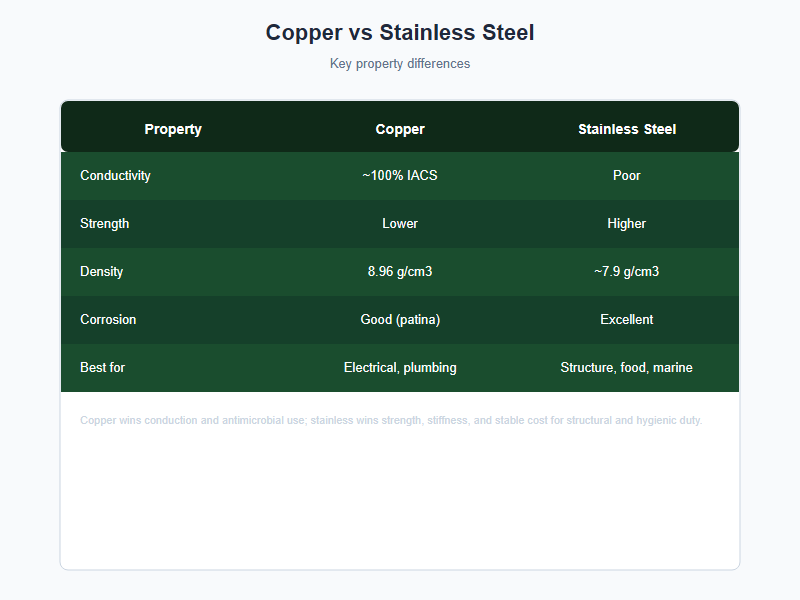
Conductivity and Heat
Copper is among the best practical conductors of electricity and heat (about 100% IACS), far ahead of stainless steel, which is a poor conductor. That makes copper the default for busbars, windings, and heat exchangers, while stainless is chosen when conduction must be minimized or where strength dominates.
Strength, Weight, and Cost
Stainless steel is roughly three times denser and significantly stronger than copper, so it carries load and resists deformation better. Copper is more expensive per kilogram and softer, so it is used where its special properties earn the premium rather than as a structural metal.
Corrosion and Hygiene
Both resist corrosion well. Copper’s oxide patina and natural antimicrobial surface suit plumbing and touch surfaces; stainless steel’s passive film and cleanability make it the food, medical, and architectural standard. See our stainless steel supply and our copper product range for grade options.
Which Should You Specify?
Specify copper for electrical, thermal, plumbing, and antimicrobial uses. Specify stainless steel for structure, food and chemical equipment, and outdoor or marine exposure. Tell HXSCO your duty and environment and we will recommend the right metal and grade.
Frequently Asked Questions
Copper is one of the best practical conductors (~100% IACS); stainless steel is a poor conductor, so copper wins for electrical and thermal uses.
Yes. Stainless steel is denser and much stronger and stiffer, making it better for structural and load-bearing parts.
Copper is typically more expensive per kilogram and its price is volatile; stainless offers more stable, lower cost for structural duty.
Stainless steel is the hygiene standard for food, medical, and process equipment; copper is valued for its natural antimicrobial surface.
Yes, but avoid direct contact in wet, salty environments where galvanic corrosion can attack the less noble metal (copper).
Ready to source Copper vs Stainless Steel from HXSCO?
Send us the grade, form, dimensions, quantity, and any certification or test requirements. HXSCO replies with a competitive quote, lead time, and mill-test options.
Request a Quote