


Short answer: Stainless steel is an iron-chromium alloy (at least 10.5% chromium) that resists rust through a self-healing passive film. HXSCO supplies austenitic (304/316), ferritic (430), martensitic (410/420), duplex (2205), and precipitation-hardening grades in sheet, plate, coil, bar, pipe, and wire, with mill-test certification for food, chemical, marine, and architectural service.
At a Glance
What Makes Steel ‘Stainless’?
Chromium in the alloy reacts with oxygen to form an invisible, adherent chromium-oxide film that seals the surface and self-heals if scratched. At least 10.5% chromium is needed for stainlessness; higher levels and additions like nickel or molybdenum extend resistance to acids, chlorides, and heat.
Austenitic, Ferritic, Martensitic & Duplex
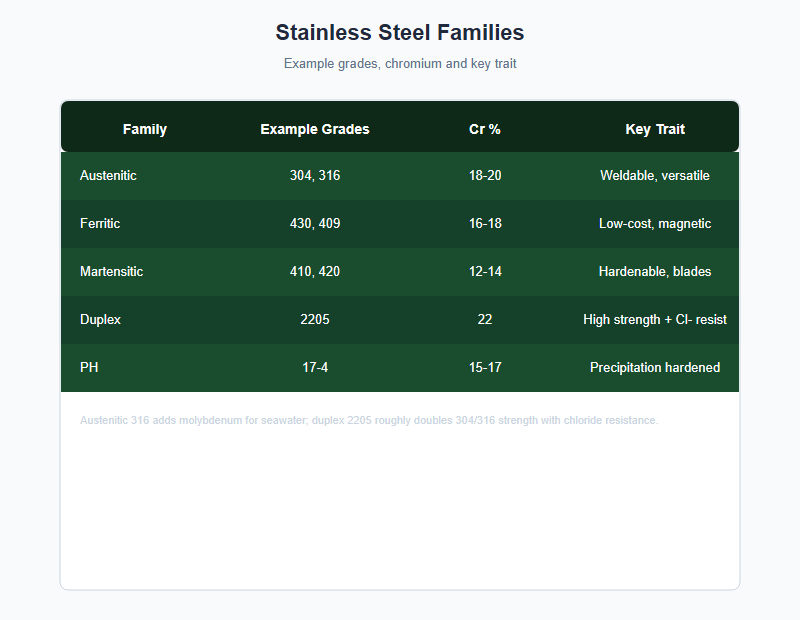
The chart contrasts the main families. Austenitic (304/316) is the most versatile, non-magnetic, and weldable, with 316 adding molybdenum for seawater. Ferritic (430) is lower-cost and magnetic for decor and appliances. Martensitic (410/420) is hardenable for cutlery and blades. Duplex (2205) pairs high strength with chloride resistance.
Supply Forms and Finishes
- Sheet & plate: 0.4-100 mm, No.1, 2B, or brushed finishes.
- Coil: for roll-formed and stamped parts.
- Bar, pipe & wire: for machined, structural, and fluid systems.
- Surface: 2B, BA, No.4 brushed, or mirror polished.
Typical Applications
Stainless serves food and beverage equipment, chemical and pharmaceutical plants, marine and coastal structures, architecture and cladding, medical instruments, and automotive exhaust. Where hygiene, corrosion, or appearance matter, stainless is the standard.
Sourcing Stainless Steel from HXSCO
HXSCO stocks and sources stainless in all major families and forms. Tell us the grade, finish, dimensions, and quantity, and we will quote with mill-test certification and the delivery schedule your project needs.
Frequently Asked Questions
At least 10.5% chromium forms a self-healing passive oxide film that prevents rust even when scratched.
316 adds molybdenum (2-3%), giving markedly better resistance to chlorides and seawater than 304.
Austenitic 304/316 are essentially non-magnetic; ferritic and martensitic grades are magnetic.
Duplex 2205 offers roughly double the strength of 304/316 with excellent chloride and stress-corrosion resistance for marine and chemical duty.
Sheet, plate, coil, bar, pipe, and wire across austenitic, ferritic, martensitic, and duplex grades, with mill certificates.
Ready to source Stainless Steel from HXSCO?
Send us the grade, form, dimensions, quantity, and any certification or test requirements. HXSCO replies with a competitive quote, lead time, and mill-test options.
Request a Quote