


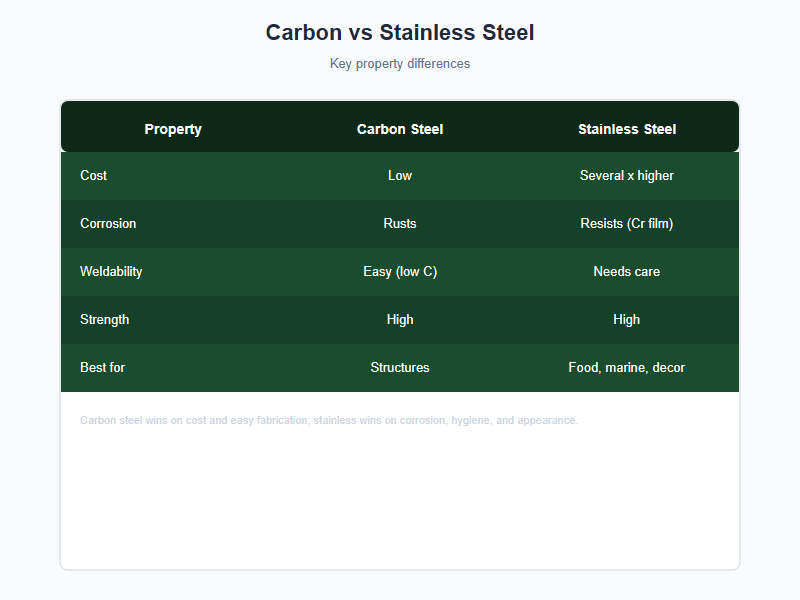
Short answer: Carbon steel and stainless steel solve different problems. Carbon steel is cheap, strong, and easy to fabricate but needs protection from rust; stainless steel costs more but resists corrosion through its chromium passive film. Choose carbon steel for cost-driven structural work and stainless where corrosion, hygiene, or appearance matter.
At a Glance
Cost and Availability
Carbon steel is far cheaper per kilogram and available in virtually every form and grade, which is why it dominates construction and high-volume manufacturing. Stainless steel costs several times more because of alloying (chromium, often nickel) and processing, but its life-cycle cost can be lower where corrosion protection would otherwise be needed.
Strength and Weldability
Both families reach high strength, but carbon steel is simpler to weld and form in low/medium-carbon grades. Stainless (especially austenitic 304/316) welds well but needs the right filler and heat control to avoid sensitization. See our stainless grades and carbon steel range for options.
Corrosion Resistance
This is the decisive difference. Carbon steel rusts quickly without coating or paint; stainless steel’s chromium film self-heals and resists most atmospheres and many chemicals. For marine, food, or chemical duty, stainless wins; for indoor or painted structural work, carbon steel is the economical choice.
Which Should You Specify?
Specify carbon steel for structures, machinery, and high-volume parts where cost rules and corrosion is managed by coating. Specify stainless steel for food, medical, marine, architectural, and chemical service where corrosion resistance and appearance pay off. Tell HXSCO the duty and we will recommend the right metal.
Frequently Asked Questions
Carbon steel is several times cheaper per kilogram and the default for cost-driven structural and volume work.
Both reach high strength; carbon steel is easier to weld and form, while stainless adds corrosion resistance at higher cost.
Yes, quickly without paint or coating; stainless resists rust through its chromium passive film.
Stainless (316 near seawater) for long life with no coating; carbon steel only if painted, galvanized, or otherwise protected.
Lead with environment and budget: managed-corrosion indoor/cost work favors carbon; wet, hygienic, or appearance-critical duty favors stainless.
Ready to source Carbon Steel vs Stainless Steel from HXSCO?
Send us the grade, form, dimensions, quantity, and any certification or test requirements. HXSCO replies with a competitive quote, lead time, and mill-test options.
Request a Quote