


Short answer: Sand casting pours molten metal into a sand mould that is destroyed after each pour, making it the most versatile and economical route for low-to-medium volumes of large, complex metal parts. Green sand (clay-bonded, reusable) handles most jobs; no-bake resin sands give tighter tolerances; shell moulding yields thin, smooth walls; and investment casting takes over when fine detail is required. Understanding each binder helps designers choose the right process and avoid shrinkage, gas and inclusion defects.
At a Glance
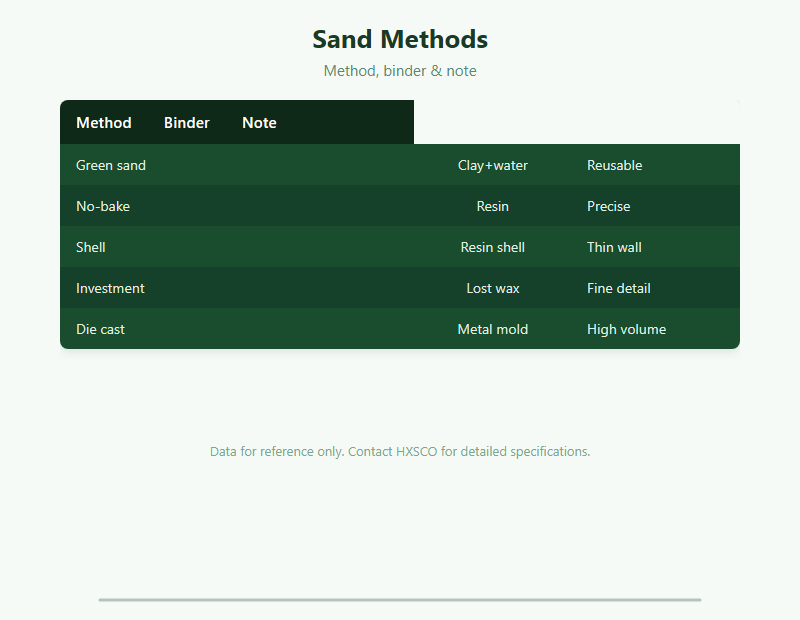
Sand Casting Processes
Compare Investment Casting Vs Die Casting and Metal Permanent Mold Casting Guide; relate to Metal Grain Size Guide and Metal Machinability Guide.
Quality & Defects
Shrinkage and inclusions are checked by Metal Ndt Guide (X-ray) and documented per Mill Test Certificate Guide; relate to Metal Wear Mechanisms Guide.
Supply & QA
Finish via Metal Surface Treatment Guide and Metal Pickling Guide; protect castings via How To Prevent Metal Rust. HXSCO supplies castable alloy stock to spec.
Get a Quote
Tell HXSCO your requirements and we will respond with a competitive quote and lead time.
Frequently Asked Questions
Pouring molten metal into a disposable sand mould.
Green sand is clay-bonded and reusable; no-bake is resin, precise.
Shrinkage, gas porosity, inclusions and cold shut.
Low/medium volume, large or complex parts, low tool cost.
HXSCO supplies castable steel, iron, aluminium and copper alloys.
Source Castable Alloys from HXSCO
HXSCO supplies steel, iron, aluminium and copper alloy stock suited to sand and permanent-mold casting. Send your grade and drawing for a quote.