


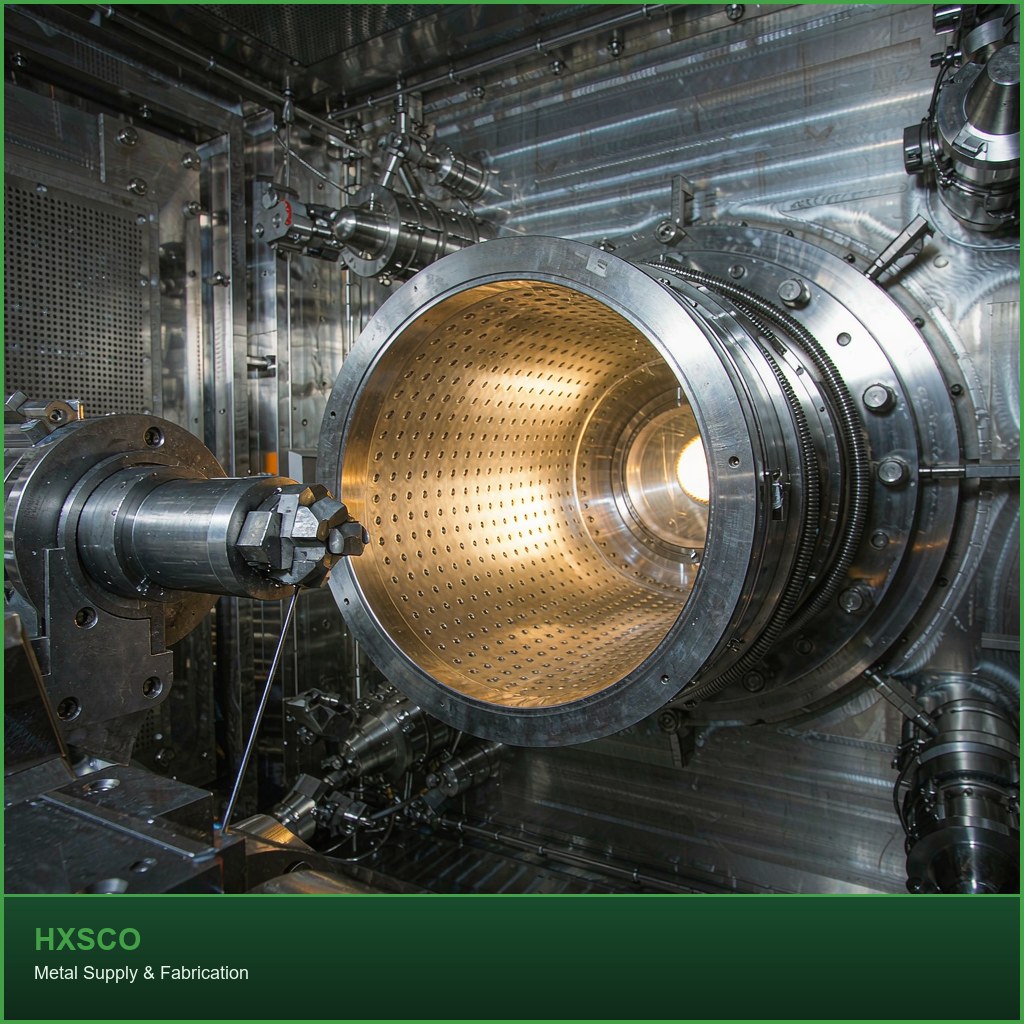
Short answer: Physical Vapour Deposition (PVD) deposits a thin, hard, wear- and corrosion-resistant coating in a high-vacuum chamber by physically ejecting atoms from a target (sputtering or arc) or by evaporating a source, then condensing them onto the part. PVD coatings such as TiN, TiAlN and CrN keep their colour and hardness at high temperatures, making them the standard finish for cutting tools, moulds, decorative hardware and medical instruments — cleaner and lower-temperature than CVD or electroplating.
At a Glance
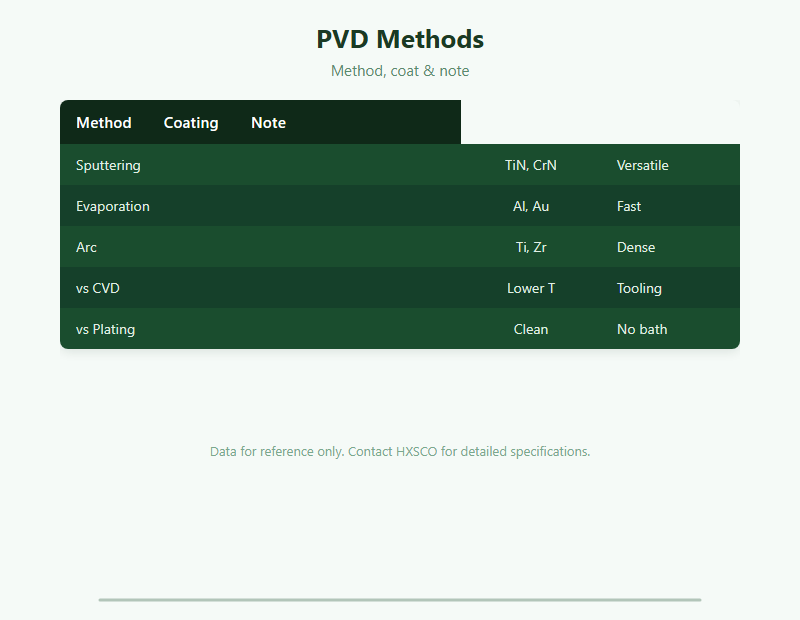
PVD Methods
PVD complements Metal Surface Treatment Guide and Metal Electroplating Guide; compare Metal Powder Coating Guide and Nickel Plating Vs Chrome Plating.
Quality
Coating thickness and adhesion checked per Metal Coating Thickness Guide, certified by Mill Test Certificate Guide.
Supply & QA
Protect base via Metal Corrosion Inhibitor Guide and How To Prevent Metal Rust. HXSCO supplies PVD-ready tool and component stock.
Get a Quote
Tell HXSCO your requirements and we will respond with a competitive quote and lead time.
Frequently Asked Questions
Vacuum deposition of a thin hard coating by sputtering/evaporation.
PVD is lower-temperature and cleaner; CVD is thicker/higher-temp.
TiN, TiAlN, CrN, AlTiN and decorative ZrN/Au.
Hard, low-friction, heat-stable coating extends tool life.
HXSCO supplies tool steel and components ready for PVD.
Source PVD-Ready Metal from HXSCO
HXSCO supplies tool steel and components ready for PVD hard coating. Send your grade and quantity for a quote.