


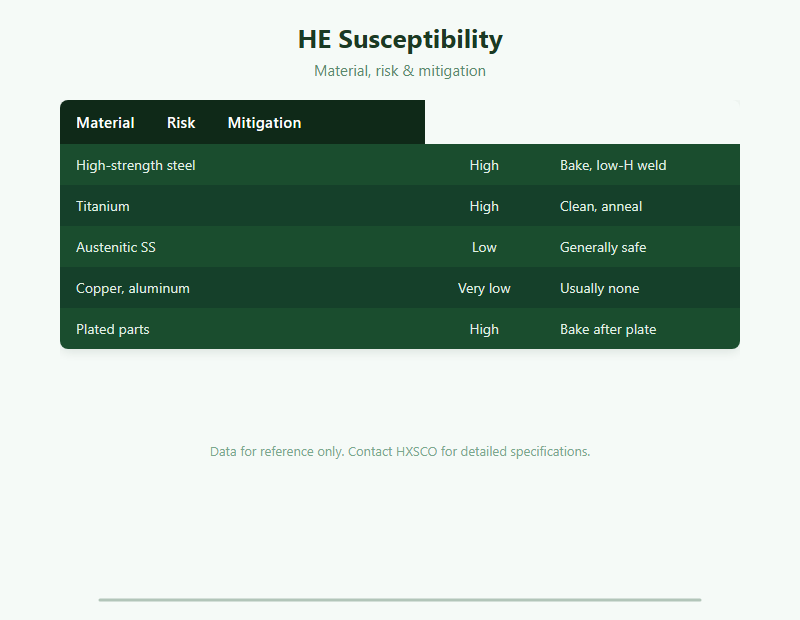
Short answer: Hydrogen embrittlement is sudden brittle failure of a metal that has absorbed atomic hydrogen — most dangerous for high-strength steels and titanium under static load; it is prevented by low-hydrogen welding, baking after plating and avoiding acid pickling.
At a Glance
The Mechanism
Atomic hydrogen enters the metal, diffuses to traps (inclusions, grain boundaries, notches) and there recombines into molecules that build pressure, or simply weakens the lattice — causing a brittle crack under a load the metal would otherwise carry. It interacts with Stress Corrosion Cracking and Galvanic Corrosion Guide, and it can trigger cracks at loads below the fatigue limit (see Metal Fatigue Endurance Limit).
Where Hydrogen Comes From
Sources are acid pickling and cleaning, cadmium/zinc plating baths, corrosion in acids, and welding without low-hydrogen practice. Pickling and passivation are in Passivation Vs Pickling; surface prep in Metal Surface Treatment Guide. Welding must use dry low-hydrogen electrodes (see How To Weld Stainless Steel) and plating must be followed by a bake. Zinc plating routes are in Zinc Plating Vs Galvanizing.
Prevention
Avoid acid exposure on high-strength parts, bake plated components within hours, use low-hydrogen welding and stress-relief, and prefer inherently resistant grades — austenitic stainless (see Stainless Steel Grades Explained) is far safer than quenched high-strength steel. Confirm with the certificate in Mill Test Certificate Guide.
Get a Quote
Tell HXSCO your requirements and we will respond with a competitive quote and lead time.
Frequently Asked Questions
Hydrogen embrittlement is sudden brittle failure of metal that has absorbed atomic hydrogen, most dangerous for high-strength steels and titanium under static load.
High-strength steels and titanium are most susceptible; austenitic stainless steel is generally safe; copper and aluminum are very resistant.
Prevent it with low-hydrogen welding, baking plated parts soon after plating, avoiding acid pickling on high-strength steel, and using resistant grades.
Yes — cadmium and zinc plating can introduce hydrogen; plated high-strength parts must be baked promptly to drive the hydrogen out.
Avoid HE with HXSCO Metal
HXSCO supplies HE-resistant grades (austenitic stainless, low-strength options) and advises on low-hydrogen welding and plating. Send your duty and quantity for a quote.