


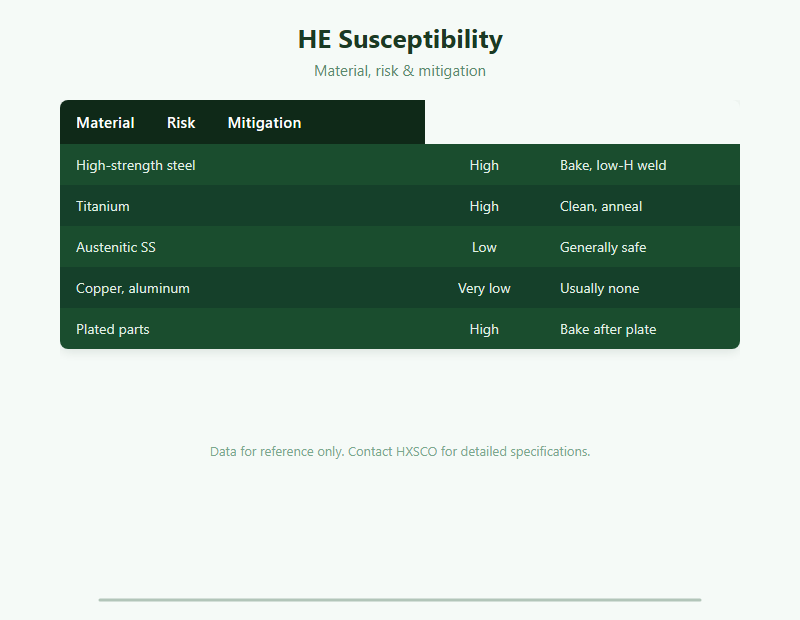
Short answer: Hydrogen embrittlement is sudden brittle failure of a metal that has absorbed atomic hydrogen — most dangerous for high-strength steels and titanium under static load; it is prevented by low-hydrogen welding, baking after plating and avoiding acid pickling.
At a Glance
The Mechanism
Atomic hydrogen enters the metal, diffuses to traps (inclusions, grain boundaries, notches) and there recombines into molecules that build pressure, or simply weakens the lattice — causing a brittle crack under a load the metal would otherwise carry. It interacts with Stress Corrosion Cracking y Galvanic Corrosion Guide, and it can trigger cracks at loads below the fatigue limit (see Metal Fatigue Endurance Limit).
Where Hydrogen Comes From
Sources are acid pickling and cleaning, cadmium/zinc plating baths, corrosion in acids, and welding without low-hydrogen practice. Pickling and passivation are in Passivation Vs Pickling; surface prep in Metal Surface Treatment Guide. Welding must use dry low-hydrogen electrodes (see How To Weld Stainless Steel) and plating must be followed by a bake. Zinc plating routes are in Zinc Plating Vs Galvanizing.
Prevention
Avoid acid exposure on high-strength parts, bake plated components within hours, use low-hydrogen welding and stress-relief, and prefer inherently resistant grades — austenitic stainless (see Grados de acero inoxidable explicados) is far safer than quenched high-strength steel. Confirm with the certificate in Mill Test Certificate Guide.
Get a Quote
Tell HXSCO your requirements and we will respond with a competitive quote and lead time.
Preguntas frecuentes
Hydrogen embrittlement is sudden brittle failure of metal that has absorbed atomic hydrogen, most dangerous for high-strength steels and titanium under static load.
High-strength steels and titanium are most susceptible; austenitic stainless steel is generally safe; copper and aluminum are very resistant.
Prevent it with low-hydrogen welding, baking plated parts soon after plating, avoiding acid pickling on high-strength steel, and using resistant grades.
Yes — cadmium and zinc plating can introduce hydrogen; plated high-strength parts must be baked promptly to drive the hydrogen out.
Avoid HE with HXSCO Metal
HXSCO supplies HE-resistant grades (austenitic stainless, low-strength options) and advises on low-hydrogen welding and plating. Send your duty and quantity for a quote.