


Short answer: Formability is how far a metal can be stamped, drawn or bent without cracking; it is governed by strain hardening (n-value), plastic anisotropy (r-value), ductility and temper, so the right alloy and temper decide whether a part draws cleanly or splits at the corner.
At a Glance
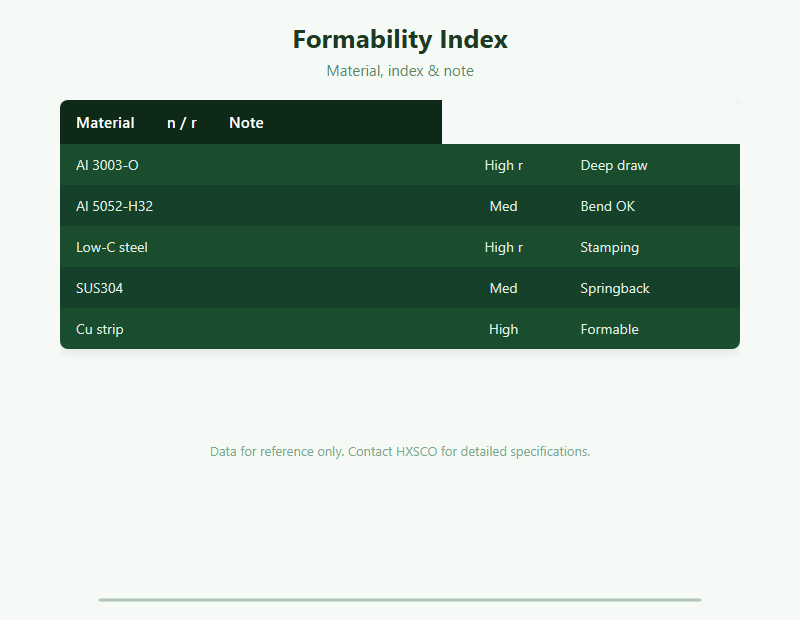
What Drives Formability
The strain-hardening exponent (n) spreads strain and resists local thinning; the normal anisotropy (r) resists earing and splitting in deep drawing. These sit with ductility and Yield Strength Vs Tensile Strength, and are set by Cold Rolling Vs Hot Rolling and Aluminum Temper Designations. Base stock comes from our Aluminum Supplier and Metal Surface Treatment Guide lines.
Forming Processes
Stamping and drawing use high-r low-carbon steel and 3003-O aluminium; bending and roll-forming use Metal Stamping Supplier, Aluminum Extrusion Supplier and Metal Bending Guide; forging and casting cover the thick and complex shapes via Forging Supplier and Casting Supplier. Avoid over-forming brittle alloys — see Metal Brittle Fracture Guide.
Quality & Tolerances
Verify with Mill Test Certificate Guide, surface finish per Surface Roughness Ra Guide and Metal Tolerances Fits Guide, and confirm soundness with Metal Ndt Guide. Good lubrication and tool condition are as important as the metal itself.
Get a Quote
Tell HXSCO your requirements and we will respond with a competitive quote and lead time.
Frequently Asked Questions
A metal’s ability to be stamped, drawn, bent or stretched into shape without cracking or excessive springback — set by ductility, n-value and r-value.
Low-carbon steel and soft aluminium (e.g. 3003-O) and copper strip draw and bend very well; work-hardened tempers and high-strength steels need more care.
n-value (strain-hardening exponent) measures how strain spreads; r-value (plastic anisotropy) measures resistance to thinning in drawing — both raise formability.
Its high strength and work hardening give noticeable elastic recovery after forming, so tooling must over-bend or coin to hold the shape.
HXSCO supplies drawing- and bending-grade aluminium, steel and copper with temper and properties documented per your process.
Source Forming-Grade Metal from HXSCO
HXSCO supplies drawing- and bending-grade aluminium, steel and copper with documented temper and properties. Send your process, gauge and quantity for a quote.