


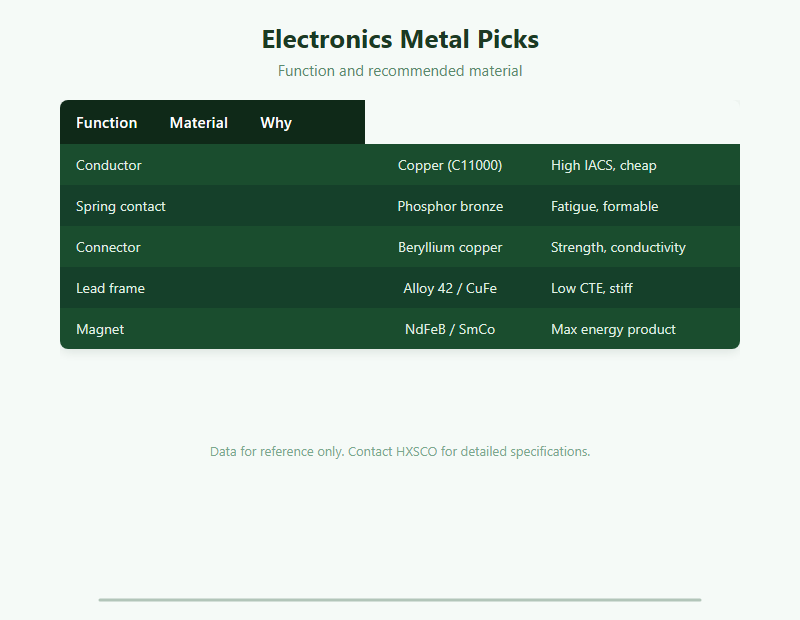
Short answer: Electronics metals are chosen for conductivity and springiness: copper for conductors, phosphor bronze and beryllium copper for contacts and connectors, controlled-expansion alloys for lead frames, and rare-earth magnets for actuators, each often finished with selective plating.
At a Glance
Conductivity Comes First
Copper C11000 carries most current paths because of its high IACS rating and low cost; trade-offs are in our Conductivity Guide, Copper vs Aluminium Wire and Copper Busbar Guide.
Springy and Formable Alloys
Contacts and connectors need fatigue resistance and formability, so phosphor bronze and beryllium copper dominate; see our Phosphor Bronze Guide and Beryllium Copper Supplier.
Magnets and Special Parts
Actuators and sensors use rare-earth magnets and specialty strips; our Rare-Earth Magnet Guide and Cobalt Alloy Supplier cover the materials.
Plating and Finish
Selective gold, tin or nickel plating controls contact resistance and solderability; the options are in our Electroplating Guide and Surface Treatment Guide.
Sourcing Electronic-Grade Stock
Buyers specify temper, surface and plating, then require certification; our How to Choose a Metal Supplier and Mill Test Certificate Guide frame the RFQ.
Get a Quote
Tell HXSCO your requirements and we will respond with a competitive quote and lead time.
Frequently Asked Questions
Copper C11000 for its high conductivity and low cost.
Phosphor bronze for fatigue and formability, beryllium copper for strength.
It combines high strength with good conductivity and springiness.
Selective gold, tin or nickel plating for resistance and solderability.
We supply copper, bronze and beryllium copper with mill certificate; send the spec.
Source Electronics Metal from HXSCO
HXSCO supplies copper, phosphor bronze and beryllium copper for electronics with mill certificate. Send your specification for a quote.