



Short answer: Desalination needs metals that resist hot, chlorinated seawater – duplex stainless, 316L, copper-nickel and titanium – so buyers match grade to chloride and temperature; our Duplex Stainless Supplier and Corrosion Resistance Guide give the supporting detail.
At a Glance
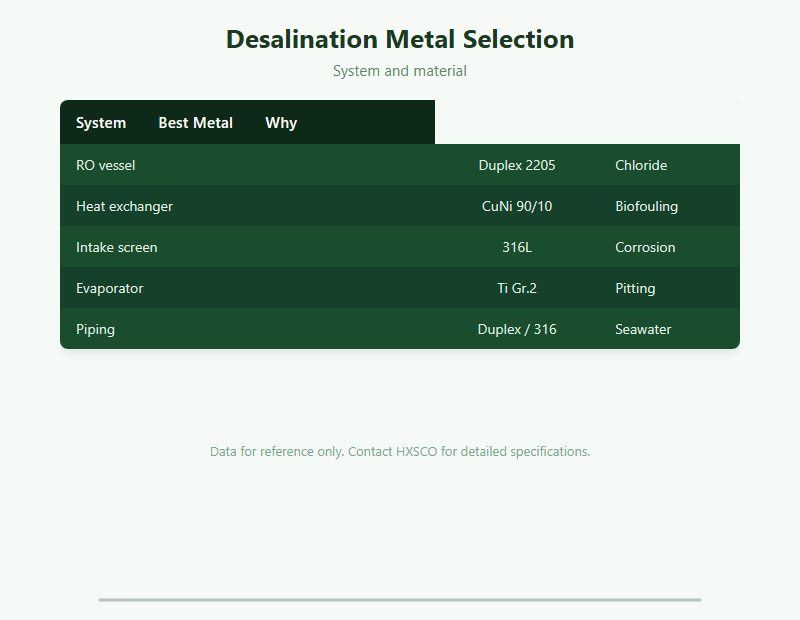
Seawater Corrosion
RO and piping use Duplex Stainless Supplier and Stainless Steel Supplier 316L, with notes in our Corrosion Resistance Guide.
Heat Exchangers and Tube
Condensers use Copper Supplier CuNi, Titanium Supplier and Nickel Alloy Supplier, a quick spec summary is below.
| System | Grade | Benefit |
|---|---|---|
| RO | 2205 | Chloride |
| HX | CuNi 90/10 | Biofouling |
| Evap | Ti Gr.2 | Pitting |
Inspection and Certification
Check PMI and wall thickness, with tests in our Quality Inspection Guide and certification in our Mill Test Certificate Guide.
Procurement Tips
Buy seawater-qualified, traceable material and pack with our Export Packing Guide.
Get a Quote
Tell HXSCO your requirements and we will respond with a competitive quote and lead time.
Frequently Asked Questions
Duplex 2205 and 2507 for chloride.
Copper-nickel 90/10 and titanium.
For moderate service; duplex for high chloride.
Excellent pitting resistance.
Yes – PMI and material certificates.
Supply Desalination Metals from HXSCO
HXSCO supplies duplex stainless, 316L, copper-nickel and titanium for desalination. Send system, grade and quantity for a quote.