



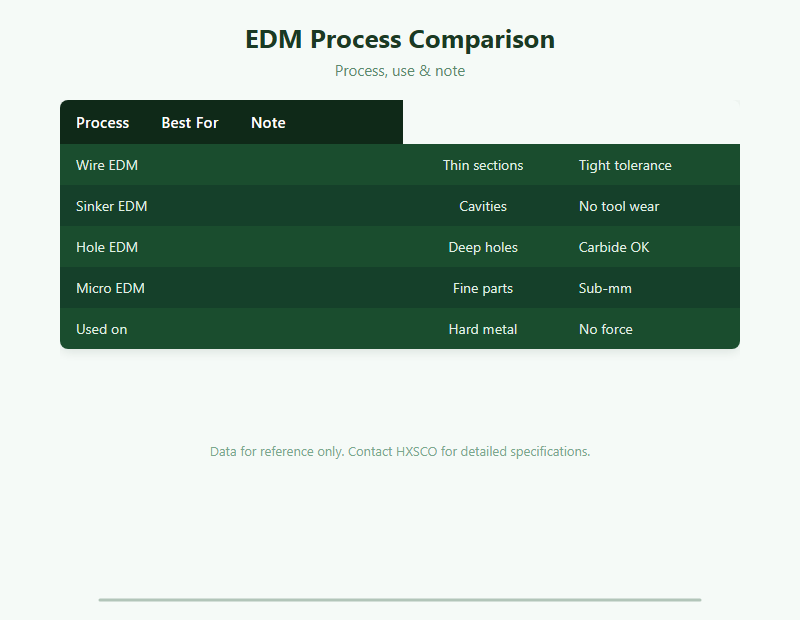
Short answer: Electrical discharge machining (EDM) cuts electrically conductive metal with controlled sparks instead of a cutting tool — so hard, brittle or delicate parts (tool steel, carbide, tungsten) can be shaped to tight tolerance with no mechanical force. Wire EDM slices profiles; sinker EDM burns cavities.
At a Glance
How the Spark Cuts
A servo-held electrode erodes the workpiece in dielectric; relate to Metal Machinability Guide and Metal Grain Size Guide. Hard stock from Tool Steel Supplier and Tungsten Supplier is ideal.
Process Selection
Pick wire vs sinker by geometry; inspect results via Metal Ndt Guide and verify size per Mill Test Certificate Guide. Wear relates to Metal Wear Mechanisms Guide.
QA & Supply
Protect finished parts via How To Prevent Metal Rust. HXSCO supplies EDM-friendly grades to your drawing.
Get a Quote
Tell HXSCO your requirements and we will respond with a competitive quote and lead time.
Frequently Asked Questions
Cutting metal with controlled electrical sparks in a dielectric fluid.
Wire slices thin profiles; sinker burns cavities with a shaped electrode.
Any conductive metal — steel, carbide, tungsten, even exotic alloys.
No — there is no cutting force, so thin and fragile parts are safe.
HXSCO supplies tool steel, carbide and tungsten suited to EDM.
Source EDM-Friendly Metal from HXSCO
HXSCO supplies tool steel, carbide and tungsten grades suited to wire and sinker EDM. Send your grade and quantity for a quote.