


When selecting stainless steel for industrial, marine, or structural applications, one question appears again and again:
Should I choose 304 or 316 stainless steel?
Although they look similar and share many properties, the differences between them can significantly impact corrosion resistance, durability, cost, and long-term performance.
In this professional guide, HXSCO explains:
-
The chemical and mechanical differences
-
Corrosion resistance comparison
-
Application suitability
-
Cost considerations
-
How to choose the right grade for your project
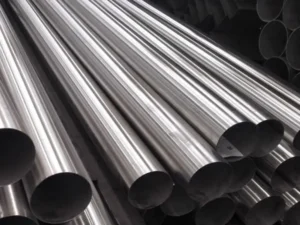
What Is 304 Stainless Steel?
304 stainless steel is the most widely used austenitic stainless steel grade.
Typical Composition (ASTM A240)
| Element | 304 (%) |
|---|---|
| Chromium (Cr) | 18–20 |
| Nickel (Ni) | 8–10.5 |
| Carbon (C) | ≤0.08 |
Key Characteristics
-
Excellent corrosion resistance
-
Good weldability and formability
-
Strong mechanical properties
-
Suitable for most general environments
-
Cost-effective
304 is commonly used in:
-
Food processing equipment
-
Kitchen equipment
-
Structural components
-
Tanks and piping
-
Architectural applications
What Is 316 Stainless Steel?
316 stainless steel is similar to 304 but contains molybdenum (Mo), which significantly improves corrosion resistance.
Typical Composition (ASTM A240)
| Element | 316 (%) |
|---|---|
| Chromium (Cr) | 16–18 |
| Nickel (Ni) | 10–14 |
| Molybdenum (Mo) | 2–3 |
| Carbon (C) | ≤0.08 |
Key Characteristics
-
Superior resistance to chlorides
-
Better performance in marine environments
-
Improved resistance to chemical corrosion
-
Higher long-term durability in harsh conditions
316 is commonly used in:
-
Marine equipment
-
Chemical processing
-
Pharmaceutical production
-
Offshore platforms
-
Coastal construction
304 vs 316: Side-by-Side Comparison
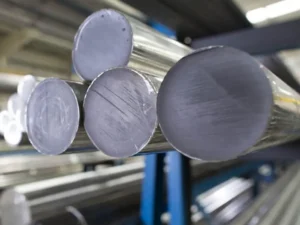
Chemical Difference
The main difference is:
👉 316 contains 2–3% molybdenum
This increases resistance to:
-
Saltwater corrosion
-
Chloride pitting
-
Chemical attack
Corrosion Resistance Comparison
| Environment | 304 | 316 |
|---|---|---|
| Indoor / Dry | Excellent | Excellent |
| Fresh Water | Very Good | Excellent |
| Marine / Saltwater | Moderate | Excellent |
| Chemical Exposure | Moderate | High |
If your project involves chlorides or salt exposure, 316 is strongly recommended.
Strength Comparison
Both grades offer similar mechanical strength:
-
Comparable tensile strength
-
Excellent toughness
-
Good weldability
There is no major structural strength difference between 304 and 316.
Cost Difference
316 stainless steel is typically:
-
15–30% more expensive than 304
-
Higher due to molybdenum content
However:
In corrosive environments, 316 often provides lower long-term replacement cost.
When Should You Choose 304?
Choose 304 if:
-
The environment is non-marine
-
Budget is a major factor
-
General corrosion resistance is sufficient
-
Used in food, interior, or structural projects
304 is the most cost-efficient solution for most industrial applications.
When Should You Choose 316?
Choose 316 if:
-
The environment contains salt or chlorides
-
Marine or coastal installation
-
Chemical exposure is present
-
Long service life is critical
-
Maintenance costs must be minimized
For offshore, coastal, and chemical projects, 316 is often mandatory.
Common Buyer Mistakes
-
Choosing 304 for marine environments to save cost
-
Ignoring chloride exposure levels
-
Not verifying actual molybdenum content
-
Purchasing from suppliers without mill certification
Incorrect grade selection can lead to:
-
Pitting corrosion
-
Premature rusting
-
Structural failure
-
Expensive replacement
Why Global Buyers Choose HXSCO for 304 & 316 Stainless Steel
As a professional one-stop metal solutions provider, HXSCO supplies certified 304 and 316 stainless steel materials worldwide.
Our Product Range
-
Stainless steel sheets & coils
-
Plates
-
Pipes & tubes
-
Bars
-
Custom processed parts
What Makes HXSCO Different?
✔ ASTM / EN / JIS compliant materials
✔ Full Mill Test Certificates (MTC)
✔ Strict composition control
✔ Custom sizes & surface finishes
✔ Stable global export supply
✔ Fast quotation and technical support
Whether your project requires 304 or 316, our technical team can help you select the most cost-effective and reliable solution.
FAQs
What is the main difference between 304 and 316 stainless steel?
316 contains molybdenum, which improves corrosion resistance, especially against chlorides and saltwater.
Is 316 stronger than 304?
No significant strength difference exists. The main advantage of 316 is corrosion resistance.
Can 304 stainless steel rust?
Yes, especially in marine or chloride-rich environments.
Is 316 worth the higher price?
In corrosive or marine environments, 316 often provides better long-term value.
Where can I buy certified 304 and 316 stainless steel?
HXSCO supplies certified 304 and 316 stainless steel with global shipping and technical support.
Final Verdict
For most indoor and general applications, 304 stainless steel is sufficient and cost-effective.
For marine, coastal, and chemical environments, 316 stainless steel is the safer and longer-lasting choice.
Choosing the right supplier is just as important as choosing the right grade.
Contact HXSCO for Professional Support
📩 Email: [email protected]
📱 WhatsApp: +1 (579) 300-2733
Request:
-
Competitive pricing
-
Technical grade recommendation
-
Custom specifications
-
Global delivery support
HXSCO — Your Reliable Stainless Steel Solutions Partner.