


Short answer: Laser cutting uses a focused beam for precise, burr-free edges, so buyers match fiber laser to material and thickness, with plate basis in our Steel Plate Supplier and finishing in our Surface Treatment Guide.
At a Glance
How Laser Cutting Works
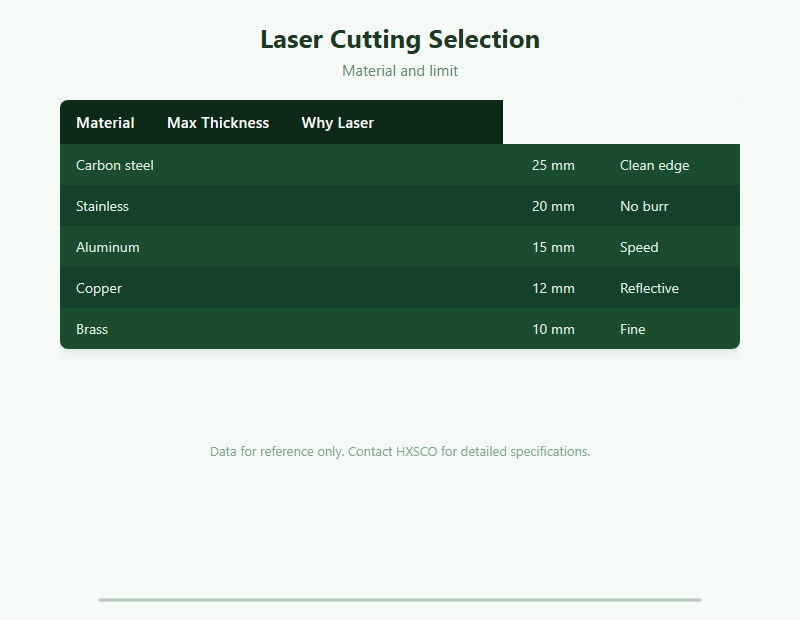
Laser cutting pairs with our Steel Plate Supplier and Steel Coil Supplier, with methods in our Machining Guide; a quick spec summary is below.
| Material | Max mm | Benefit |
|---|---|---|
| Carbon steel | 25 | Clean edge |
| Stainless | 20 | No burr |
| Aluminum | 15 | Speed |
Materials and Thickness
We cut Stainless Steel Supplier and Carbon Steel Supplier plus Aluminum Supplier, Copper Supplier and Brass Supplier.
Edge Quality and Inspection
Cut edges are deburred and inspected, with finishes in our Surface Treatment Guide and certification in our Mill Test Certificate Guide; checks are in our Quality Inspection Guide.
Procurement Tips
Send DXF, thickness and grade, and pack with our Export Packing Guide.
Get a Quote
Tell HXSCO your requirements and we will respond with a competitive quote and lead time.
Frequently Asked Questions
Fiber laser for carbon and stainless.
Up to 25 mm in carbon steel.
Yes – minimal burr, light cleanup.
Yes – with proper parameters.
Yes – dimension and material certs.
Supply Laser-Cut Parts from HXSCO
HXSCO supplies laser-cut plates and profiles in steel, stainless, aluminum and copper. Send drawing, thickness and quantity for a quote.