


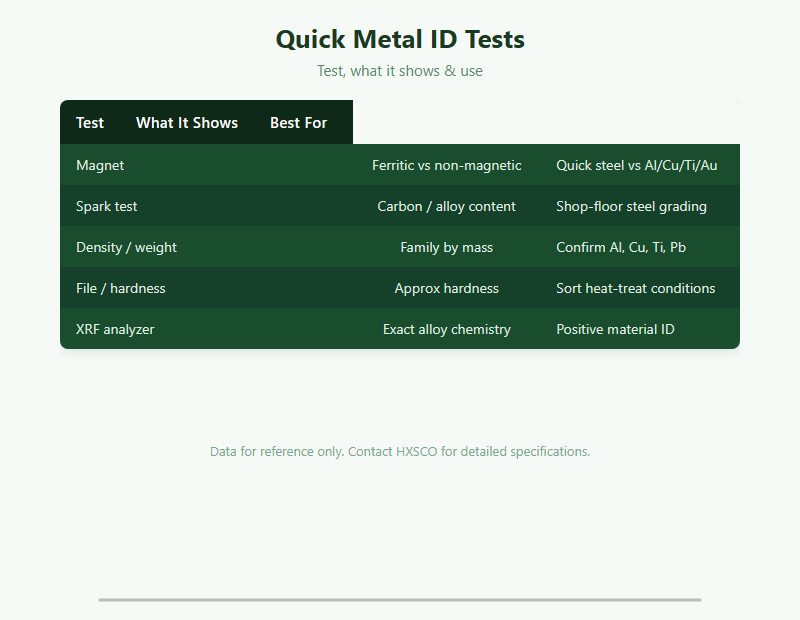
Short answer: Identify an unknown metal first with a magnet (magnetic = ferritic steel or ferritic stainless; non-magnetic = aluminum, copper, titanium, austenitic stainless, brass, bronze), then confirm with a spark test for carbon content, a density check for family, and an XRF analyzer for exact chemistry and positive material identification.
At a Glance
Start With a Magnet
The magnet is the fastest first filter. Carbon and low-alloy steels, cast iron, and ferritic/martensitic stainless are attracted; aluminum, copper, brass, bronze, titanium, lead and austenitic 304/316 stainless are not. The reason some stainless is magnetic and some is not is the structure difference in Ferritic Vs Austenitic Stainless, and the broader behaviour across the periodic table is in Metal Magnetism Guide. A non-magnetic reading already narrows the field to a handful of families, which you then separate by density — the reference values are in Steel Density Reference — and by colour and tarnish, which point to the copper family described in Copper Alloys Guide.
Spark Test and Density
On a grinding wheel, carbon steel throws long white sparks with many forks that increase with carbon content; high-speed and tool steels give radical, bushy bursts; austenitic stainless gives almost no spark; aluminum and copper barely mark the wheel. Combined with a simple density measurement — weigh in air and water, divide — you can separate 2.7 g/cm3 aluminum, 7.9 steel, 8.9 copper, 4.5 titanium and 11.3 lead with confidence. For a harder number on hardness, the methods in Metal Hardness Testing Methods help sort heat-treat conditions once the family is known.
XRF and Chemical Confirmation
For positive material identification — required before welding, heat-treating or certifying a part — a handheld XRF (X-ray fluorescence) analyzer returns the exact elemental chemistry in seconds: it tells 304 from 316, 6061 from 7075, and brass from bronze by zinc and tin content. That precision underpins the grade tables in Brass Grades Guide and Stainless Steel Grades Explained, and it is what lets our Titanium Supplier and other programmes certify incoming stock. Always confirm the alloy with XRF before any critical use rather than relying on a magnet and a guess.
Get a Quote
Tell HXSCO your requirements and we will respond with a competitive quote and lead time.
Frequently Asked Questions
Start with a magnet to split magnetic from non-magnetic families, use a spark test for carbon content, check density by weighing in air and water, and confirm exact chemistry with a handheld XRF analyzer.
Ferritic and martensitic stainless steels are magnetic because of their body-centred-cubic structure, while austenitic 304 and 316 are essentially non-magnetic; cold work can make austenitic grades weakly magnetic.
The spark pattern reveals carbon and alloy content: plain carbon steel throws long forked white sparks, tool steels give bushy bursts, and austenitic stainless produces almost no spark.
Yes. A handheld XRF returns the full elemental chemistry in seconds and is the standard tool for positive material identification of stainless, aluminum, copper alloys and titanium before welding or certification.
Need Positive Material ID?
HXSCO supplies aluminum, copper, stainless, titanium and steel with XRF-verified chemistry and mill certificates. Send your grade requirement for a quote.