


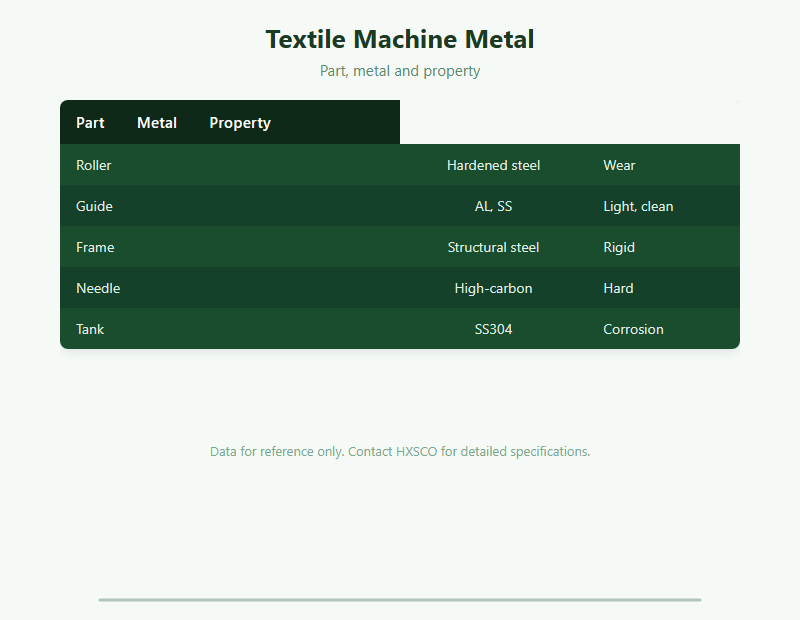
Short answer: Textile machinery uses hardened steel and tool steel for rollers and needles that resist wear, aluminium and stainless for light, clean guides and tanks, and structural steel for rigid frames, chosen for fatigue life, surface finish and resistance to fibre and chemical contact.
At a Glance
How Textile Machines Wear
High-speed contact and fibre abrasion drive the choice of hard metals, with the basis in our Hardness Comparison and Fatigue Guide; wear plates are in our Wear Plate Guide.
Rollers and Guides
Chrome-plated hardened rollers and aluminium or stainless guides keep surfaces clean, with finish in our Surface Treatment Guide and machining in our Machining Guide.
Frames and Tanks
Structural steel frames and stainless finishing tanks resist load and chemical, detailed in our Structural Guide and Corrosion Protection Guide; welds in our Welding Joining Guide.
Sourcing and Spec
Builders confirm grade and tolerance via our Tolerances and Fits Guide and Mill Test Certificate Guide; packing is in our Export Packing Guide.
Get a Quote
Tell HXSCO your requirements and we will respond with a competitive quote and lead time.
Frequently Asked Questions
Hardened and chrome-plated steel resists wear on high-speed rollers.
Aluminium is light and clean, reducing inertia and fibre drag.
Stainless 304 or 316 resists the dye and chemical bath.
High-carbon and tool steel needles hold a hard, sharp edge.
CNC machining and grinding to the fits in our tolerances guide.
Source Textile Machine Metal with HXSCO
HXSCO supplies hardened steel, aluminium, stainless and structural steel for textile machinery rollers, guides and frames. Send your part list for a quote.