


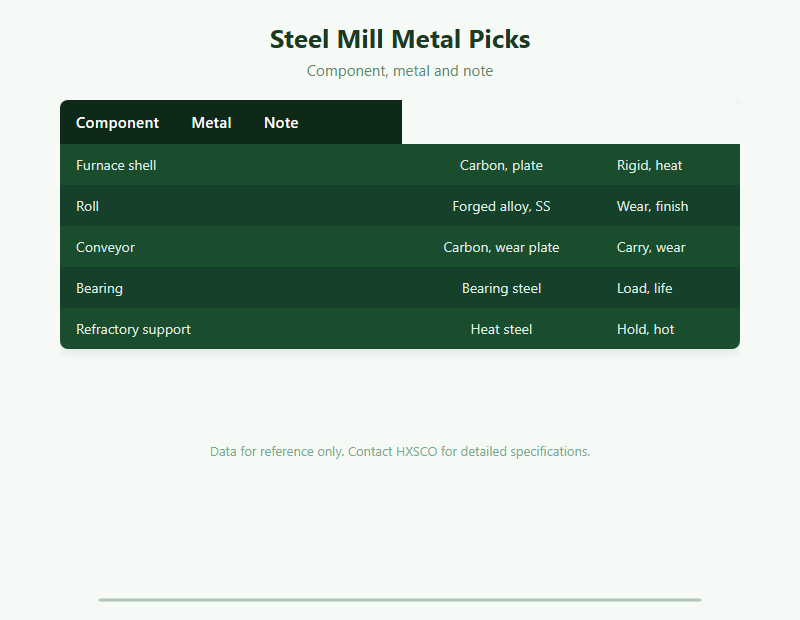
Short answer: Steel mills use heavy carbon and alloy plate for furnace shells and structures, forged alloy and stainless rolls for wear and surface finish, wear-plate conveyors for abrasive carrying, and bearing steel for loaded rotating parts, all chosen for rigidity, high-temperature stability and long service under heat, load and abrasion.
At a Glance
What Mills Need
Heat, load and abrasion lead the choice, with the basis in our Metal Strength Comparison and high-temperature notes in our Creep High Temperature Guide and Metal Fatigue Guide.
Furnace and Rolls
Shells use carbon and alloy plate and rolls use forged alloy or stainless, with hardening in our Heat Treatment Guide and wear care in our Wear Plate Guide; the alloy basis is in our Alloy Steel Supplier.
Conveyor and Structure
Conveyors use carbon steel with wear plate and structures are welded, with fabrication in our Sheet Fabrication Guide and joining in our Welding Joining Guide; corrosion care is in our Corrosion Protection Guide.
Quality and Sourcing
Mill parts are checked by inspection, with methods in our Quality Inspection Guide; buyers confirm grade via our Mill Test Certificate Guide and pack per our Export Packing Guide.
Get a Quote
Tell HXSCO your requirements and we will respond with a competitive quote and lead time.
Frequently Asked Questions
Carbon and alloy plate for rigid, heat-stable structures.
Forged alloy and stainless steel for wear and surface finish.
Wear plate resists the abrasion of hot and heavy burden.
Bearing steel for loaded, long-life rotating parts.
Confirm grade and certificate, then pack for heavy export shipment.
Equip Steel Mills with HXSCO
HXSCO supplies plate, forged alloy rolls, wear plate and bearing steel for furnaces, casters and rolling lines. Send specs for a quote.