


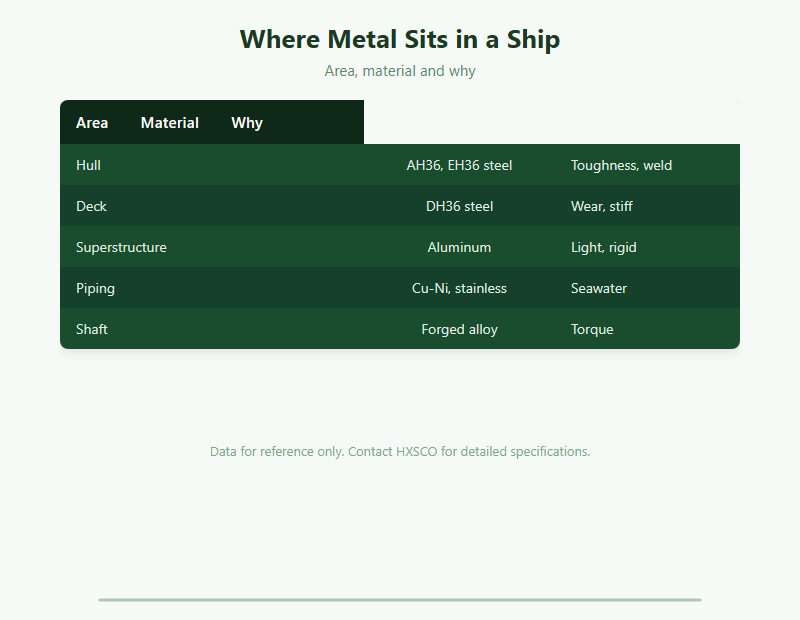
Short answer: Shipbuilders use AH36 and EH36 steel plate for hull and deck, aluminum for superstructures to save weight, copper-nickel and stainless for seawater piping and forged alloy for shafts, with low-temperature toughness, weldability and corrosion plan decided up front.
At a Glance
Hull and Structure
Hull plate is normalized or TMCP steel with notch toughness at low temperature, graded like the structural basis in our Bridges and Infrastructure Guide; the strength data is in our Strength Comparison and fatigue in our Fatigue and Endurance Limit guide.
Seawater Systems
Sea chests, pipes and condensers use copper-nickel and stainless to resist biofouling and chloride; the alloy view is in our Copper Grades Guide, the marine plan in our Marine and Offshore Guide and tube choice in our Pipe vs Tube Guide.
Lightweighting
Aluminum superstructures cut top-weight for stability; the alloy is in our Aluminum Supplier and Aluminum Extrusion Profiles Guide, and the weight goal shares the Aerospace Guide logic.
Corrosion and QA
Coatings, cathodic protection and inspection keep a hull sound; the plan is in our Corrosion Protection Guide and Corrosion Resistance Guide, with checks in our Quality Inspection Guide.
Get a Quote
Tell HXSCO your requirements and we will respond with a competitive quote and lead time.
Frequently Asked Questions
AH36 and EH36 with low-temperature notch toughness are standard hull plate grades.
Aluminum superstructures cut weight high up, improving stability and speed.
Copper-nickel and duplex or 316 stainless resist biofouling and chloride.
Forged alloy steel is picked for torque and fatigue in the propeller shaft.
Yes – we supply AH36/EH36 plate, aluminum and seawater alloys with certificate.
Build Ships with HXSCO Metal
HXSCO supplies AH36/EH36 ship plate, aluminum superstructure stock and seawater alloys with mill certificate. Send your spec for a quote.