


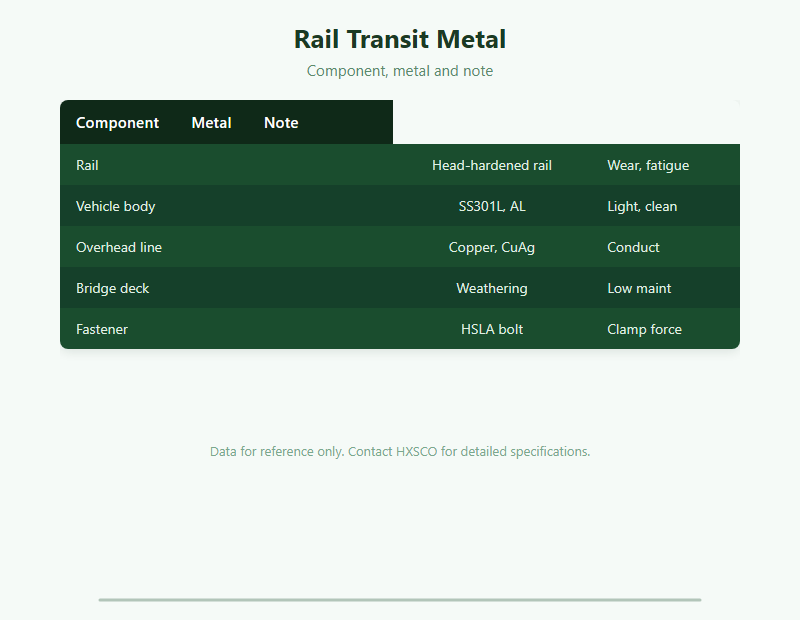
Short answer: Rail and transit systems use head-hardened rail steel for the track, stainless and aluminium for lightweight vehicle bodies, copper and copper-silver for overhead catenary, weathering steel for low-maintenance structures, and high-strength bolts for fastening, chosen for fatigue life, weight and corrosion performance.
At a Glance
Track and Structures
Rail steel and weathering structures carry load and resist fatigue, with the basis in our Metal Strength Comparison and fatigue detail in our Fatigue Guide; the transport context is in our Railway Transport Guide.
Vehicles and Bodies
Stainless and aluminium lighten vehicles and resist corrosion, detailed in our Bridges and Infrastructure Guide and the grade map in our Stainless Steel Supplier page.
Power and Welding
Copper catenary and welded structures need sound joints, with methods in our Welding Joining Guide and corrosion care in our Corrosion Protection Guide; conductors are in our Copper Supplier range.
Standards and Sourcing
Rail grades follow EN and AREMA rules, with checks in our Standards Comparison Guide; certification is in our Mill Test Certificate Guide and packing in our Export Packing Guide.
Get a Quote
Tell HXSCO your requirements and we will respond with a competitive quote and lead time.
Frequently Asked Questions
Head-hardened rail steel for wear and rolling-contact fatigue.
Light weight cuts energy use and improves acceleration.
Copper and copper-silver catenary for conductivity.
Forms a stable patina that cuts repaint and maintenance.
EN or AREMA grade with EN 10204 3.1 certificate.
Source Rail Transit Metal with HXSCO
HXSCO supplies rail steel, stainless, aluminium, copper and weathering steel for track, vehicles and stations. Send your specification for a quote.