



Short answer: Foundries use cast iron and carbon steel for mould boxes and frames, refractory-lined carbon steel for ladles and furnace shells, stainless for clean conveyors, and copper alloys for chills and tooling, all chosen for heat resistance, wear and dimensional stability through repeated thermal cycles.
At a Glance
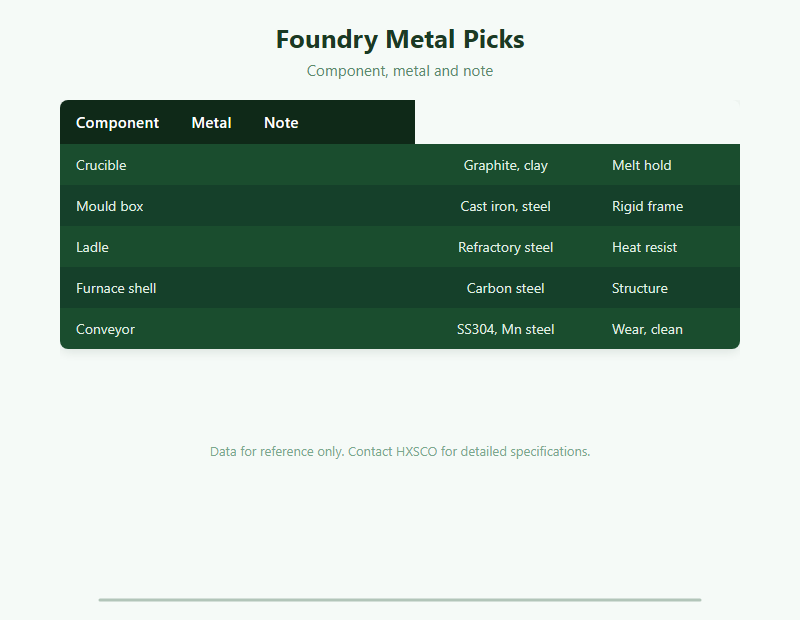
What a Foundry Needs
Heat, abrasion and thermal shock load the metal, so stability and wear lead the choice, with the basis in our Casting Methods Guide and the comparison in our Forging vs Casting Guide.
Moulds and Frames
Mould boxes and patterns use cast iron and carbon steel for rigidity, detailed in our Metal Strength Comparison; copper chills speed solidification where our Copper Supplier range applies.
Furnace and Ladle
Furnace shells and ladles need heat-resistant steel and refractory linings, with care in our Heat Treatment Guide and resistance in our Corrosion Protection Guide; welding is in our Welding Joining Guide.
Quality and Sourcing
Casting and weld quality are checked by inspection, with methods in our Quality Inspection Guide and Non-Destructive Testing Guide; buyers confirm grade via our Mill Test Certificate Guide and pack per our Export Packing Guide.
Get a Quote
Tell HXSCO your requirements and we will respond with a competitive quote and lead time.
Frequently Asked Questions
Cast iron or carbon steel for rigidity and wear under repeated use.
Refractory protects the steel shell from molten metal heat.
Carbon steel shell with refractory lining for structure and heat.
Yes – copper pulls heat fast to control solidification and grain.
Dimensional checks, hardness and NDT with EN 10204 3.1 certificate.
Source Foundry Metal with HXSCO
HXSCO supplies cast iron, carbon steel, stainless and copper alloys for crucibles, moulds, ladles and furnace parts. Send your bill of materials for a quote.