


Short answer: Electric vehicles use aluminum for light weight, copper for power and high-strength steel for structure, so buyers balance mass and conductivity, with material basis in our Aluminum Supplier and properties in our Strength Comparison.
At a Glance
Battery and Power
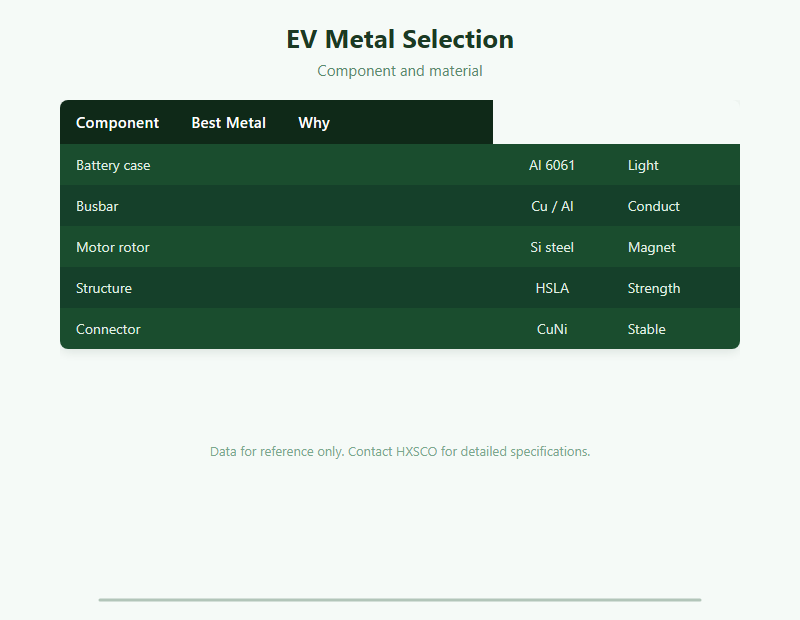
Battery and motor parts use Aluminum Supplier and Copper Supplier plus Nickel Alloy Supplier, with the property basis in our Strength Comparison; a quick spec summary is below.
| Component | Grade | Benefit |
|---|---|---|
| Battery case | 6061 | Light |
| Busbar | Cu / Al | Conduct |
| Structure | HSLA | Strength |
Motors and Structure
Frames use HSLA Steel Supplier and Carbon Steel Supplier plus Stainless Steel Supplier, with fatigue notes in our Fatigue Guide.
Joining and Inspection
EV parts are joined by our Welding Guide and inspected per our Quality Inspection Guide with certification in our Mill Test Certificate Guide.
Procurement Tips
Share the EV platform and standard, and pack with our Automotive Guide and Export Packing Guide.
Get a Quote
Tell HXSCO your requirements and we will respond with a competitive quote and lead time.
Frequently Asked Questions
Aluminum for cases and structures.
High conductivity for busbars and motors.
HSLA and advanced high-strength steel.
Yes – coatings and stainless where needed.
Yes – traceability and material certs.
Supply EV Metals from HXSCO
HXSCO supplies aluminum, copper, HSLA and stainless for electric-vehicle battery, motor and structure. Send spec and quantity for a quote.