


Short answer: Extrusion forces heated billet through a die to make long profiles; billet heating sets flow, the die sets shape, quench and ageing set temper, and the alloy choice (mainly aluminium, some steel) decides strength, finish and cost.
At a Glance
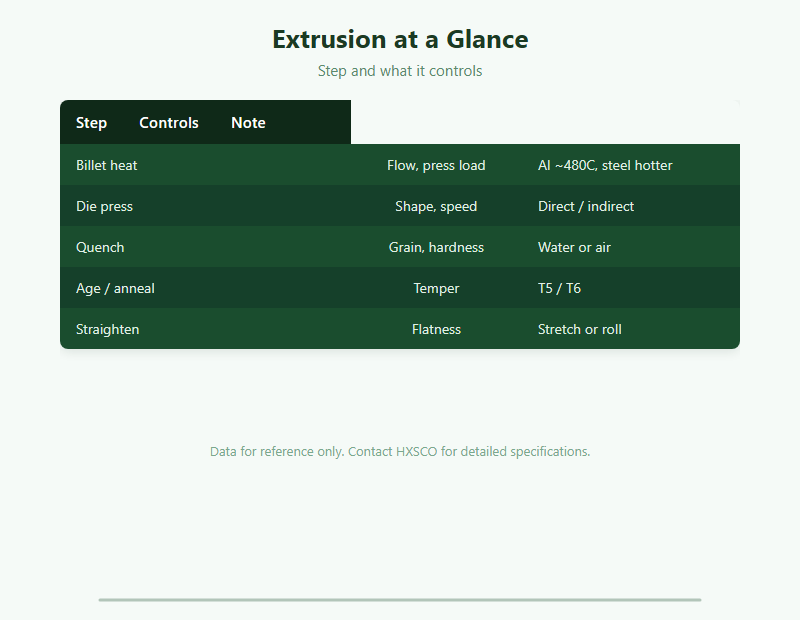
Heating and Flow
A heated billet is pushed through the die, so temperature controls flow and press load; the alloy base is in our What is Aluminum Alloy and the families in our Aluminum Supplier, with the strength data in our Strength Comparison.
Die, Shape and Speed
The die sets the profile and the press sets speed and tolerance; our Extrusion Profiles Guide shows common shapes, and our Tolerances Guide covers the limits you can hold.
Quench, Age and Temper
Quenching locks the grain and ageing sets temper (T5/T6); the temper system is in our Temper Designations and the alloy pick in our 6061 vs 7075 comparison.
Finish and Compare
Profiles can be anodized, coated or left mill, then compared against other processes; the finish side is in our Anodized Aluminum Guide and the steel option in our Stainless Steel Supplier.
Get a Quote
Tell HXSCO your requirements and we will respond with a competitive quote and lead time.
Frequently Asked Questions
Mostly aluminium alloys; some steel and copper are extruded too.
It locks the grain so ageing can develop the temper.
T6 is solution-heat-treated and aged; T5 is aged from press heat only.
Good — tight tolerances on standard profiles, per our tolerances guide.
Yes — anodized, powder-coated or left mill finish.
Order Extruded Profiles from HXSCO
HXSCO extrudes aluminium and steel profiles to your die and temper. Send the drawing and quantity for a quote.