


Short answer: Metal etching dissolves a controlled layer with acid through a mask — chemical (wet) etching for nameplates, art and fine parts, and electrolytic/photo-etching for high-precision thin components — giving burr-free detail that machining cannot match.
At a Glance
How Etching Works
A resist mask protects the areas to keep; acid removes the exposed metal to a set depth. It complements Metal Surface Treatment Guide and Metal Stamping Vs Machining; for steel the etchant often follows the grade in Carbon Steel Supplier.
Metals & Etchants
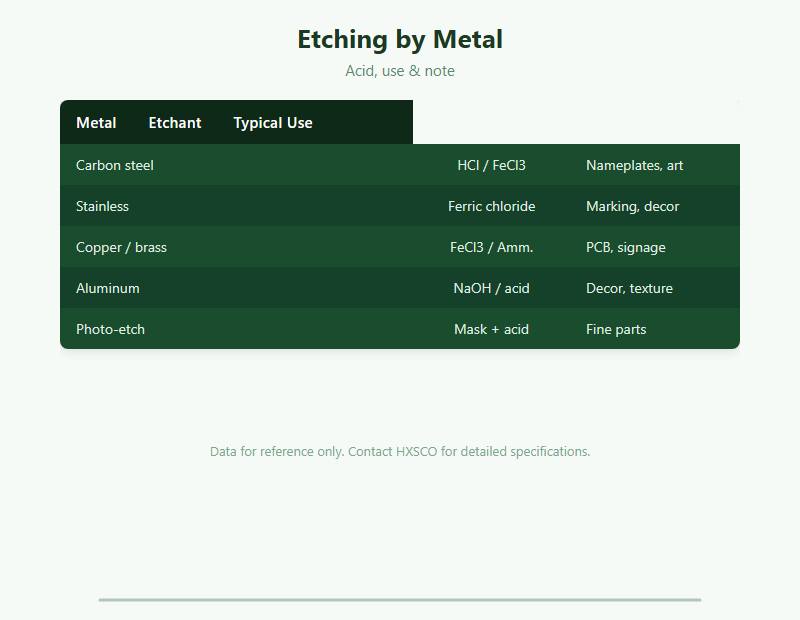
Ferric chloride etches stainless and copper; HCl-based mixes etch carbon steel; caustic etches aluminum. Photo-etching (mask + acid) makes burr-free fine parts for electronics and mesh. Corrosion context in Galvanic Corrosion Guide; conductivity note in Copper Vs Aluminum Wire.
Applications & Safety
Etching makes nameplates, signage, art panels, PCBs and precision meshes. Neutralise and treat effluent per local rules; every base lot ships with a mill certificate per Mill Test Certificate Guide.
Get a Quote
Tell HXSCO your requirements and we will respond with a competitive quote and lead time.
Frequently Asked Questions
Metal etching uses an acid and a resist mask to dissolve a controlled layer of metal, producing burr-free detail for markings, art and fine parts.
Ferric chloride is the common etchant for stainless steel marking and decorative etching; the process follows the grade in our stainless range.
For very fine, burr-free thin parts (PCBs, meshes, nameplates) photo-chemical etching beats machining on detail and cost.
Yes. HXSCO supplies stainless, carbon steel, copper and aluminum sheet suitable for chemical and photo etching, with mill certificates.
Source Etchable Metal from HXSCO
HXSCO supplies stainless, carbon steel, copper and aluminum sheet for chemical and photo etching, with mill certificates. Send your alloy and gauge for a quote.