


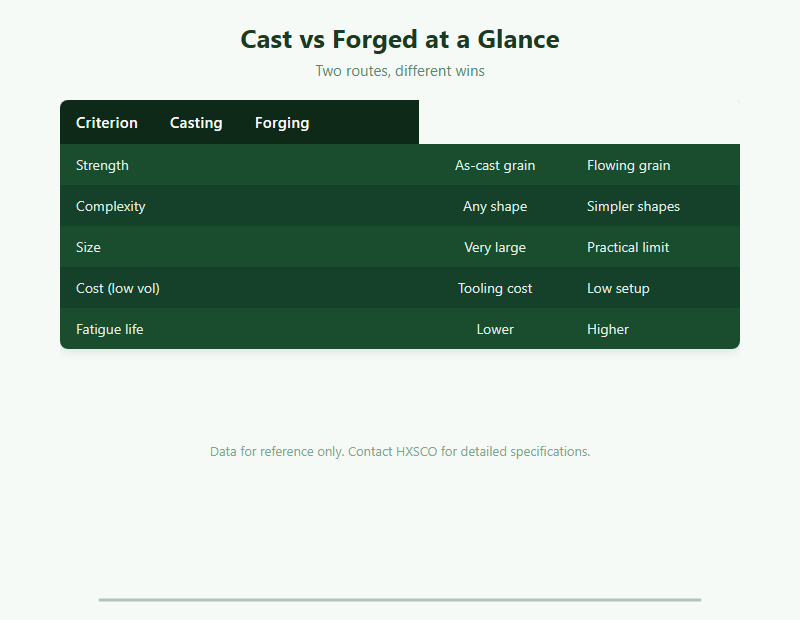
Short answer: Forging generally beats casting on strength, fatigue and grain flow, while casting wins on complex shape, size and low-tooling cost, so the choice depends on load, volume and geometry; our Machining Guide and Heat Treatment Guide cover what comes next.
At a Glance
How Each Works
Casting pours molten metal into a mould; forging shapes hot or cold stock under pressure. Sourcing is in our Casting Supplier and Forging Supplier, with the process basis in our Stamping Guide.
Strength and Fatigue
Forged grain flow follows the part shape, lifting fatigue and impact; data is in our Strength Comparison and Fatigue Guide, and inspection in our Quality Inspection Guide.
Shape, Size and Cost
Casting handles complex, very large parts with modest tooling, while forging suits simpler, load-bearing parts; the finishing basis is in our Surface Treatment Guide and Cutting Processes Guide.
How to Choose
Pick casting for complex housings and low volumes, forging for pins, shafts and high-load links; certify per our Mill Test Certificate Guide.
Get a Quote
Tell HXSCO your requirements and we will respond with a competitive quote and lead time.
Frequently Asked Questions
Forged – continuous grain flow gives higher strength and fatigue.
Complex shapes, very large parts, lower tooling cost.
At low volume yes; at high volume it can be cheaper.
Yes – normalizing, quench and anneal are common.
Use NDT and mill certs per our Quality Inspection Guide.
Source Cast or Forged Parts from HXSCO
HXSCO supplies cast and forged components in steel, stainless and alloys. Send drawing and quantity for a competitive quote.