


Short answer: Anodizing grows a controlled aluminum-oxide layer for corrosion resistance, hardness and color – Type II for decoration and Type III for hard wear – with the comparison in our Anodizing vs Powder Coating guide and arranged via our Metal Coating Supplier page.
At a Glance
What Anodizing Does
An electrolytic process thickens the natural oxide on aluminum into a sealed, integral layer, with the material basis in our Aluminum Supplier page and the finishing overview in our Metal Surface Treatment Guide.
Type I, II and III
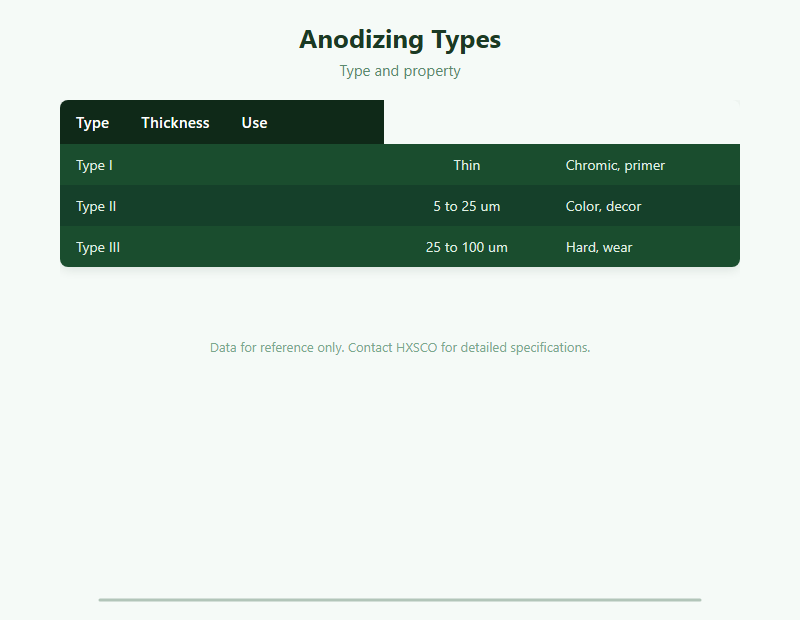
Type I chromic anodize is thin and used as a primer, Type II (5 to 25 microns) is the decorative color workhorse, and Type III hardcoat (25 to 100 microns) resists wear, with the comparison in our Anodizing vs Powder Coating guide.
| Type | Thickness | Use |
|---|---|---|
| Type I | Thin | Chromic, primer |
| Type II | 5 to 25 um | Color, decor |
| Type III | 25 to 100 um | Hard, wear |
Color and Sealing
Type II takes dyes before sealing for stable color; specify shade, thickness and seal type.
Best Applications
Architectural trim, consumer goods and wear parts use anodizing; the alloy view is in our Aluminum Supplier page.
Quality and Certification
Coating thickness and sealing quality are verified, with verification in our Quality Inspection Guide and the document detail in our Mill Test Certificate Guide.
Buyer Checklist
Define type, color and thickness; plan quantity and timing with our MOQ and Lead Time Guide and price with our Price Quotation Guide.
Get a Quote
Tell HXSCO your requirements and we will respond with a competitive quote and lead time.
Frequently Asked Questions
Type II with dye and seal.
Type III hardcoat.
Yes – anodizing is aluminum only.
25 to 100 microns.
Thickness and sealing test.
Get Anodizing with HXSCO
HXSCO arranges Type II and Type III anodizing for aluminum in your color with thickness reports. Send alloy, part size and spec for a quote.