


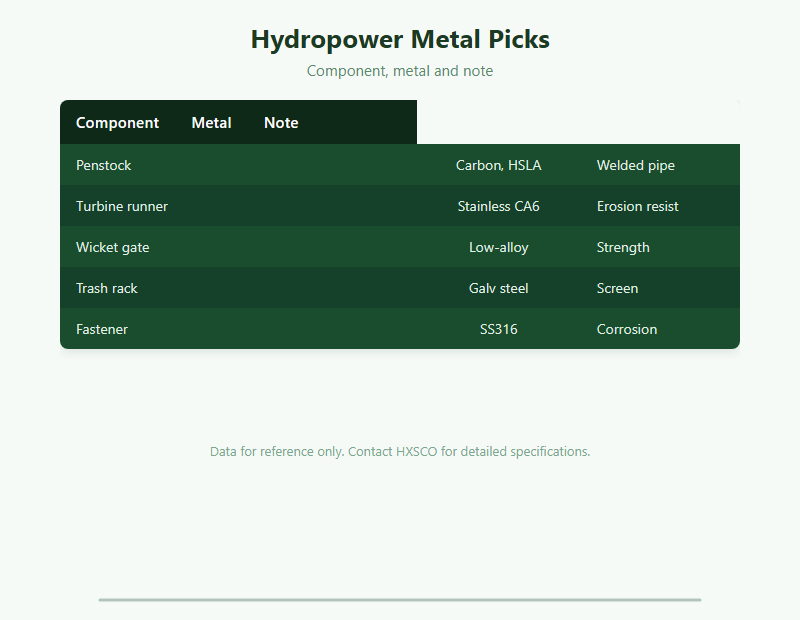
Short answer: Hydropower plants use carbon and high-strength low-alloy steel for penstocks and structures, stainless steel for turbine runners and gates exposed to cavitation, and galvanized or stainless steel for trash racks and fasteners, all chosen for strength, weldability and water-side corrosion resistance.
At a Glance
What Hydropower Needs
Water, pressure and grit load the metal, so strength and weldability lead the choice, with the basis in our Metal Strength Comparison and the grade map in our Carbon Steel Supplier page.
Penstocks and Piping
Large welded penstocks use carbon and HSLA plate, detailed in our Piping and Pipeline Guide und Pressure Vessels Guide; welding is in our Welding Joining Guide.
Turbines and Gates
Runners and gates face cavitation, so stainless grades are used, with resistance data in our Corrosion Resistance Guide and casting in our Casting Methods Guide.
Corrosion and Sourcing
Water-side protection comes from coatings and stainless trim, covered in our Corrosion Protection Guide; buyers confirm grade and cert via our Mill Test Certificate Guide and pack per our Export Packing Guide.
Get a Quote
Tell HXSCO your requirements and we will respond with a competitive quote and lead time.
Häufig gestellte Fragen
Carbon and high-strength low-alloy plate, welded and coated for water service.
Stainless resists cavitation erosion and pitting in the runner and gates.
Galvanized or stainless steel racks screen debris at the intake.
Weld and UT inspection with EN 10204 3.1 certificate.
Yes – SS316 fasteners resist the wet, corrosive environment.
Source Hydropower Metal with HXSCO
HXSCO supplies plate, pipe, stainless and fasteners for penstocks, turbines and gates with the certificate your hydro project needs. Send your bill of materials for a quote.