



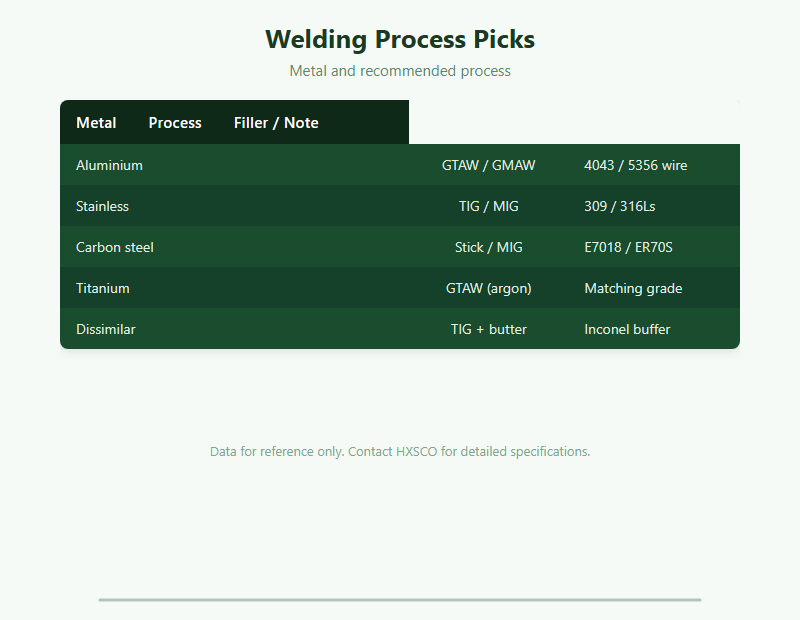
Short answer: Joining metals well means matching process to alloy: GTAW or GMAW with 4xxx/5xxx wire for aluminium, TIG or MIG with 309/316Ls for stainless, and stick or MIG for steel, with filler, shielding gas and post-clean chosen against the base metal and service.
At a Glance
Aluminium Needs Care
Aluminium welds with GTAW or GMAW using 4043 or 5356 wire and strict cleaning, because oxide and porosity bite fast; the comparison is in our Welding Aluminium vs Steel and the base alloy in our Aluminium Supplier range.
Stainless Without Carbide
Stainless welds with TIG or MIG using low-carbon filler and back-purging to avoid sensitisation; the how-to is in our How to Weld Stainless und Welding Guide, and the grade choice in our 304 vs 316.
Steel the Workhorse
Carbon steel welds with stick or MIG using E7018 or ER70S filler; the basics are in our How to Weld Carbon Steel and the cross-metal question in our Weld Stainless to Mild Steel.
Dissimilar and Reactive Metals
Joining titanium or stainless to steel needs a buffer layer and inert gas; our Titanium vs Stainless und Titanium Grades Guide explain the risks and the post-clean in our Surface Treatment Guide.
Sourcing Weld-Ready Stock
Buyers specify alloy, temper and certificate so the shop can weld first time; our How to Choose a Metal Supplier und Mill Test Certificate Guide frame the RFQ.
Get a Quote
Tell HXSCO your requirements and we will respond with a competitive quote and lead time.
Häufig gestellte Fragen
GTAW (TIG) or GMAW (MIG) with 4043 or 5356 wire.
Low-carbon filler, back-purge and controlled heat input.
Yes with the right filler and procedure; see our guide.
To stop embrittling oxidation in the weld zone.
We supply aluminium, stainless and steel with mill certificate.
Source Weld-Ready Metal from HXSCO
HXSCO supplies aluminium, stainless and steel in weld-ready grades with mill certificate. Send your alloy and quantities for a quote.