


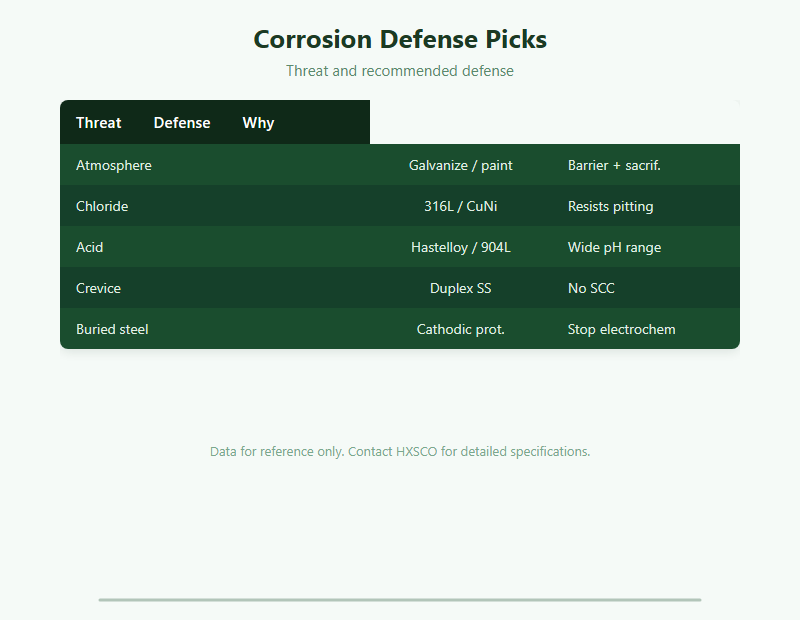
Short answer: Corrosion is controlled by picking the right alloy for the medium, adding a barrier (paint, powder or galvanizing), choosing stainless or copper-nickel for chloride, and applying cathodic protection to buried or submerged steel — the defense matches the threat.
At a Glance
Alloy Selection First
The cheapest defense is the right grade for the medium; the pick is in our Stainless Steel Supplier und 304 vs 316 guide, the environment case in our Corrosion Resistance Guide and the zinc base in our Galvanized Steel Sheet page.
Coatings, Paint and Galvanizing
Paint, powder and galvanizing add a barrier and sacrificial layer; the finishing side is in our Surface Treatment Guide, the zinc process in our What is Galvanized Steel, coated options in our PPGI PPGL Coated Steel and the comparison in our Galvanized vs Stainless page.
Chloride, Acid and Seawater
Chloride and acid need stainless, duplex or nickel alloys; the environment case is in our Seawater Corrosion Guide, alloys in our Nickel Alloy Supplier und Copper Supplier, with families in our Types and Grades of Steel.
Cathodic Protection and Care
Buried or submerged steel is protected cathodically, and good packing prevents transit corrosion; the packing note is in our Export Packing Guide, the long-life option in our Weathering Steel Guide, limits in our Tolerances Guide and proof in our Mill Test Certificate Guide.
Get a Quote
Tell HXSCO your requirements and we will respond with a competitive quote and lead time.
Häufig gestellte Fragen
Galvanizing or paint systems that barrier moisture and sacrifice zinc.
316L stainless or copper-nickel resists chloride pitting.
For buried or submerged steel like pipelines and tanks.
No — pick the alloy, then add coating for extra life.
By spec, test and mill certificate covering grade and coating.
Protect Metal with HXSCO
HXSCO supplies the right alloy, coating and galvanized options for your corrosion duty. Tell us the environment and we will recommend and quote.