



Short answer: Hot-chamber die casting keeps the metal molten in a bath and pumps each shot through an immersed gooseneck into the die, giving very fast cycles for low-melting zinc and magnesium alloys; the process family is in our Die Casting Guide.
At a Glance
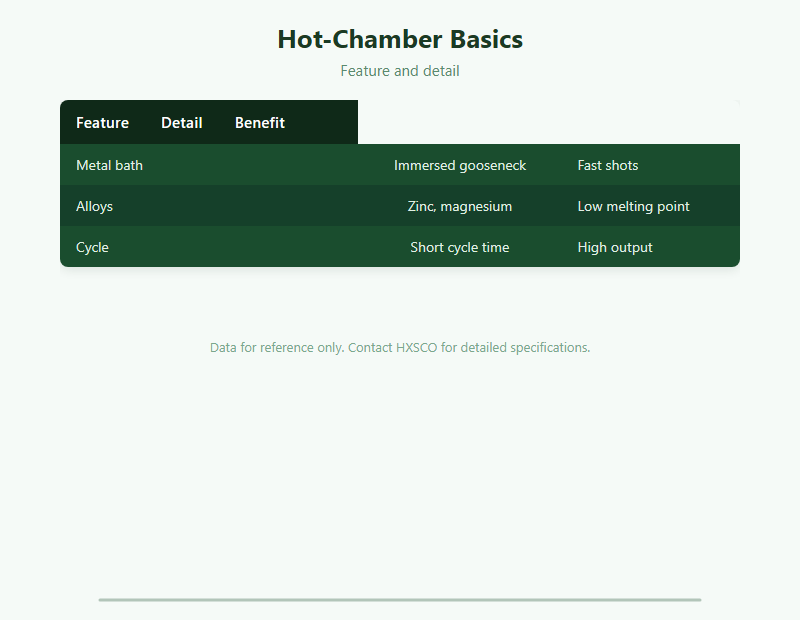
How the Hot-Chamber Works
The gooseneck is immersed in molten metal; a piston pushes a measured shot into the die, then the die opens and the part is ejected; the overall context is in our Die Casting Guide.
Alloys for Hot-Chamber
Zinc Zamak and ZA alloys are the classic choice, with some magnesium grades; see our Alloys Guide und Zinc Guide.
Vorteile
Fast cycle times, simple feeding and good surface finish make the process economical for high-volume small parts; compare with the Cold-Chamber Guide.
Limitations
The immersed mechanism limits use to alloys that will not attack the gooseneck and melt at moderate temperatures; aluminum is generally excluded.
Typische Anwendungen
Zinc hardware, connectors, housings, toys and fittings; the tooling basis is in our Mold Design Guide.
Quality and Finishing
Check properties per our Inspection Guide and finish per our Finishing Guide.
Get a Quote
Tell HXSCO your requirements and we will respond with a competitive quote and lead time.
Häufig gestellte Fragen
Zinc and some magnesium alloys.
The gooseneck draws directly from the molten bath.
Generally no – aluminum needs cold chamber.
Zinc hardware, housings and connectors.
Yes – see our die casting supplier page.
Get a Hot-Chamber Quote
HXSCO supplies zinc and magnesium hot-chamber die castings with tooling, finishing and certificates. Send your drawing and volume for a quote.