


Short answer: Metal gauge numbers run opposite to thickness, with steel and aluminum using different mm values at the same gauge, so always confirm mm or inch on the order; our Steel Sheet Supplier y Aluminum Sheet Supplier stock certified thicknesses.
At a Glance
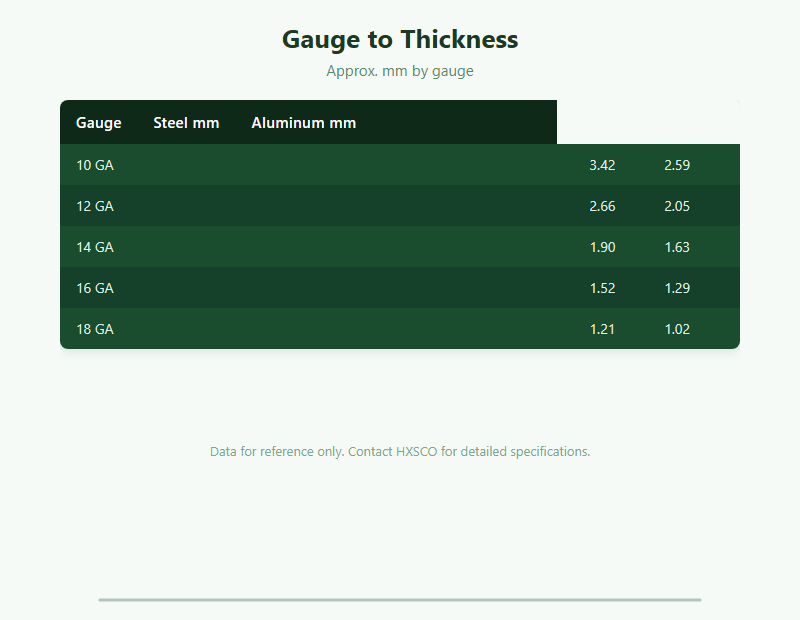
Reading a Gauge Chart
Gauge is a legacy thickness code; steel and aluminum differ, so convert to mm before ordering. Sourcing is in our Steel Sheet Supplier, Aluminum Sheet Supplier y Metal Strip Supplier.
US vs Metric
US gauge and metric mm coexist; specify mm to avoid error, with density context in our Density Comparison Guide and weight in our Comparación de fuerzas.
Specifying Sheet and Plate
Match gauge to load and forming; bending notes are in our Cutting Processes Guide y Surface Treatment Guide; certify per our Mill Test Certificate Guide.
Common Pitfalls
Do not assume gauge equals mm across metals; confirm tolerance and pack per our Export Packing Guide.
Get a Quote
Tell HXSCO your requirements and we will respond with a competitive quote and lead time.
Preguntas frecuentes
No – higher gauge means thinner metal.
No – same gauge number, different mm.
Specify mm or inch to avoid confusion.
About 12 to 13 GA depending on standard.
From our steel and aluminum sheet suppliers with mill certs.
Buy Certified Sheet and Plate from HXSCO
HXSCO supplies steel, stainless and aluminum sheet and plate in exact mm thickness with mill certificates. Send gauge or mm and quantity for a quote.