


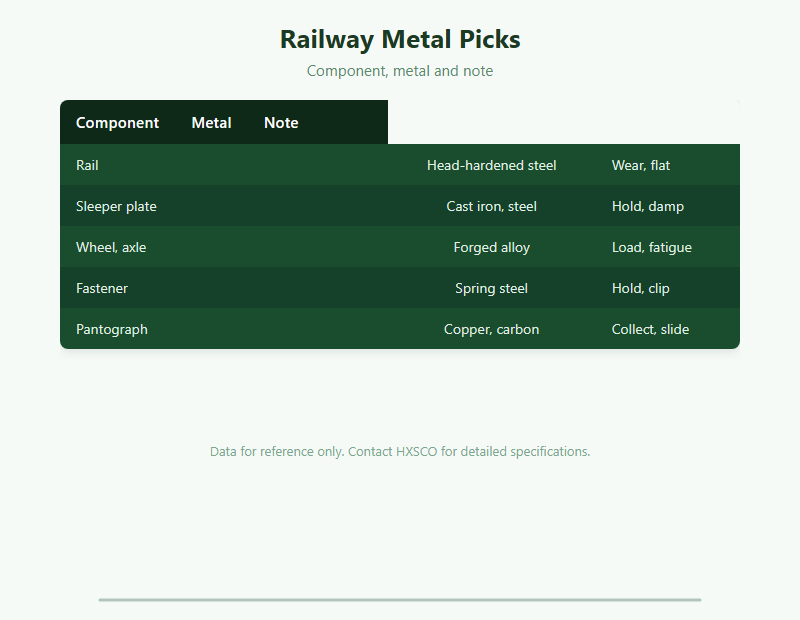
Short answer: Railways use head-hardened rail steel for wear and flat running, forged alloy wheels and axles for load and fatigue life, cast iron or steel sleeper plates for location and damping, and spring-steel fasteners for secure clipping, all chosen for wear resistance, fatigue life and safety under heavy cyclic load.
At a Glance
What Rail Needs
Wear and fatigue lead the choice, with the basis in our Metal Strength Comparison y Hardness Comparison; fatigue notes are in our Metal Fatigue Guide and wear care in our Wear Plate Guide.
Rail and Wheels
Rail uses head-hardened steel and wheels use forged alloy, with hardening in our Heat Treatment Guide and forming in our Forging vs Casting Guide; the alloy basis is in our Alloy Steel Supplier and tool basis in our Tool Steel Supplier.
Fasteners and Structure
Fasteners use spring steel and plates are cast iron or steel, with stamping in our Stamping Guide and joining in our Welding Joining Guide; context is in our Railway Transport Guide.
Quality and Sourcing
Rail parts are checked by inspection, with methods in our Quality Inspection Guide y Non-Destructive Testing Guide; buyers confirm grade via our Mill Test Certificate Guide.
Get a Quote
Tell HXSCO your requirements and we will respond with a competitive quote and lead time.
Preguntas frecuentes
Head-hardened steel rail for wear and flat running.
Forged alloy steel for load and fatigue life.
Spring steel clips hold rail securely under vibration.
Cast iron or steel plates locate and damp the rail.
Confirm grade and certificate, then pack for heavy shipment.
Source Railway Metal with HXSCO
HXSCO supplies head-hardened rail, forged alloy wheels and axles, and spring-steel fasteners. Send standards and quantities for a quote.