


Short answer: Spring design matches material and geometry to the load and fatigue life needed — high-carbon and stainless wire for general duty, 17-7 PH and Inconel for heat or corrosion, with the spring rate set by wire diameter, coil count and shear modulus.
At a Glance
How a Spring Works
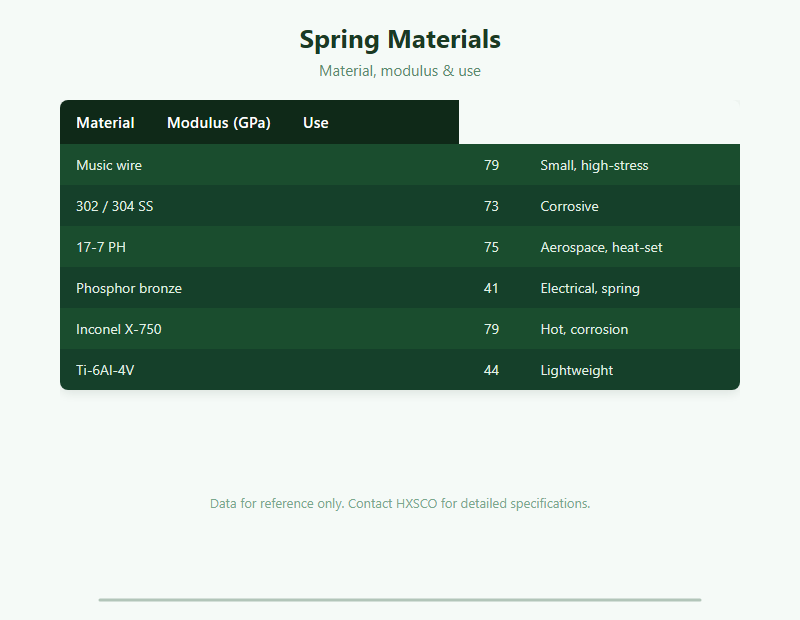
A coil spring stores energy as the wire twists in shear; its rate (N/mm) scales with the shear modulus G and the fourth power of wire diameter, and inversely with coil count and diameter. G is the material property behind the table — see Metal Modulus Of Elasticity. We source spring wire from Spring Steel Supplier and the grade families in Spring Steel Types Guide.
Choosing Material
Music wire and carbon steel give the highest strength for small springs; 302/304 stainless (see Explicação das classes de aço inoxidável) adds corrosion resistance at some cost in life. For heat or corrosion, 17-7 PH (covered via 17 4 Ph Stainless Steel) and Inconel 600 Vs 625 hold properties where carbon steel would relax. Electrical or non-magnetic springs use Phosphor Bronze Guide. Fatigue governs life, so design around Metal Fatigue Endurance Limit and protect against rust with How To Prevent Metal Rust.
Stress, Set & Life
Over-stress causes permanent set; the design must stay inside the material’s allowable shear, derived from Yield Strength Vs Tensile Strength. Stress relief after coiling (see Stress Relieving Vs Annealing e Metal Heat Treatment Guide) stabilises dimensions, and weight is estimated with How To Calculate Steel Weight. Where a spring must also resist corrosion-fatigue, plan with Metal Corrosion Fatigue Guide.
Get a Quote
Tell HXSCO your requirements and we will respond with a competitive quote and lead time.
Perguntas frequentes
Music wire and high-carbon steel for maximum strength and low cost; 302/304 stainless for corrosion resistance; 17-7 PH or Inconel for heat and aggressive environments; phosphor bronze for electrical springs.
Spring rate scales with the shear modulus and the fourth power of wire diameter, and inversely with the number of active coils and the coil diameter — so wire diameter is the dominant lever.
Stay below the material’s endurance limit with a comfortable stress margin, shot-peen to induce compressive surface stress, and stress-relieve after coiling; avoid corrosion with plating or stainless material.
Yes. 302/304 and 17-7 PH stainless are common spring materials; 17-7 PH can be heat-set to hold shape at elevated temperature.
Yes. HXSCO supplies spring steel strip, wire and bar in the grades above, with hardness and mill certificates on request.
Source Spring Materials from HXSCO
HXSCO supplies spring steel, stainless and nickel-alloy wire and strip with hardness and mill certificates. Send your grade, form and quantity for a quote.