


Short answer: High-temperature oxidation is the growth of a metal oxide scale in hot air or flue gas; resistance comes from chromium, aluminium or silicon that form a slow, adherent protective film, so alloy choice and coating decide how long a part survives in service.
At a Glance
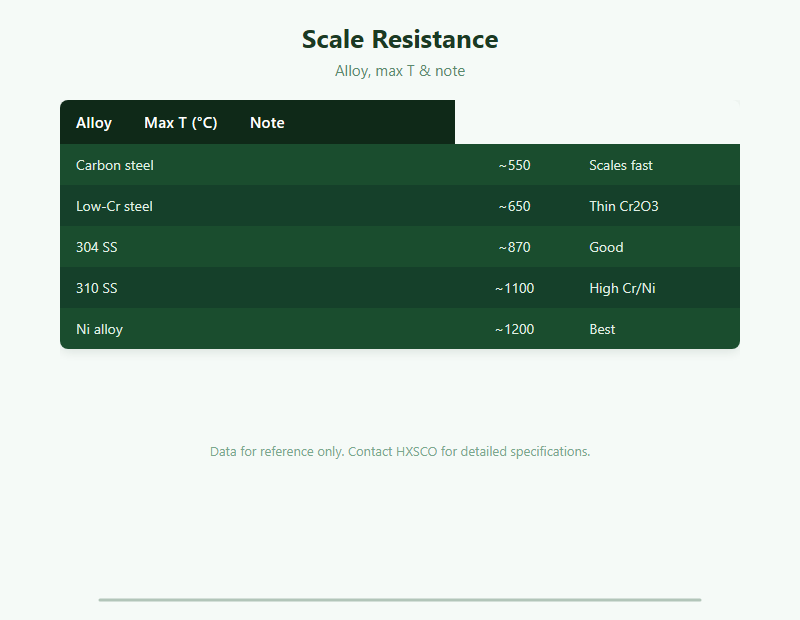
Oxidation Kinetics & Scale
Scale grows by metal/oxygen diffusion; a dense, adherent Cr2O3 or Al2O3 film slows it dramatically, while iron oxide on plain steel spalls and regrows. This links to Metal High Temperature Oxidation Guide duty, Metal Creep Guide e Metal Thermal Fatigue Guide; microstructure context in Grain Structure Metals.
Alloy Selection
Carbon steel scales above ~550 C; low-chromium steel to ~650 C; 304/316 (Stainless Steel 316 Properties, Stainless Steel 304 Properties) to ~870 C; 310 and Nickel Alloy Supplier (Inconel/Hastelloy, Hastelloy Guide, Inconel Vs Hastelloy Guide) to 1100-1200 C. Compare Refractory Metals Supplier for extreme heat and Duplex Stainless Supplier for moderate.
Protection & QA
Apply aluminide/chromide coatings or use Metal Surface Treatment Guide, control atmosphere, and inspect scale and wall loss with Metal Ndt Guide. Certificate chemistry and service temp per Mill Test Certificate Guide; relate to Mill Test Certificate Guide callouts.
Get a Quote
Tell HXSCO your requirements and we will respond with a competitive quote and lead time.
Perguntas frequentes
Growth of an oxide scale on a hot metal surface in air or flue gas; it thins the section and can spall under thermal cycling.
High-chromium/nickel alloys (310 SS, Inconel, Hastelloy) and aluminised coatings resist scaling to the highest temperatures.
Its chromium forms a thin, adherent, self-healing Cr2O3 film that blocks further oxygen diffusion.
Plain carbon steel scales rapidly above about 550 C; low-alloy and stainless extend that to 650-870 C and beyond.
HXSCO supplies 310/309 stainless, nickel alloys and Hastelloy with chemistry certificates for oxidation-limited service.
Source High-Temperature Alloys from HXSCO
HXSCO supplies 310/309 stainless, nickel alloys and Hastelloy with chemistry certificates for oxidation-limited high-temperature service. Send your temperature and quantity for a quote.