


Short answer: TIG welding rods are matched to the base metal for a clean, controlled weld: ER70S-2 for steel, 308L and 316L for stainless and 4043 or 5356 for aluminium; pick the rod with our Welding Wire Supplier and the process view in our Metal Welding Guide.
At a Glance
TIG Filler Basics
TIG uses a non-consumable tungsten and a separate filler rod, so you choose the rod grade independently of the torch, with the technique in our How to Weld Stainless Steel guide.
Steel and Stainless Rods
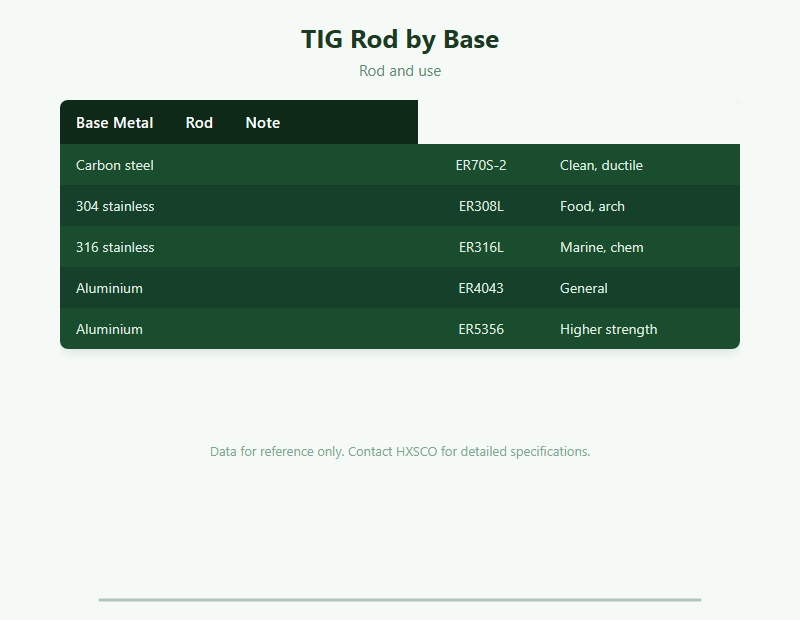
ER70S-2 suits carbon steel while 308L and 316L preserve corrosion resistance in stainless joints, with alloy notes in our Stainless Steel Buyers Guide.
Aluminium Rods
ER4043 is the general choice and ER5356 adds strength for structural aluminium, with the alloy range in our Aluminium Supplier page.
Colour Match and Quality
Buy rods with clean, oxide-free surfaces and MTC traceability, verified via our Quality Inspection Guide and documented in our Mill Test Certificate Guide.
Get a Quote
Tell HXSCO your requirements and we will respond with a competitive quote and lead time.
Perguntas frequentes
ER70S-2 for clean, ductile welds.
Match the base: 304 takes 308L, 316 takes 316L.
Yes for autogenous joints on thin material.
ER5356 is stronger than 4043.
Dry and clean to avoid hydrogen porosity.
Get TIG Rod Quote
HXSCO supplies TIG rods in ER70S-2, 308L, 316L and aluminium grades with MTC. Send grade, diameter and quantity for a quote.