


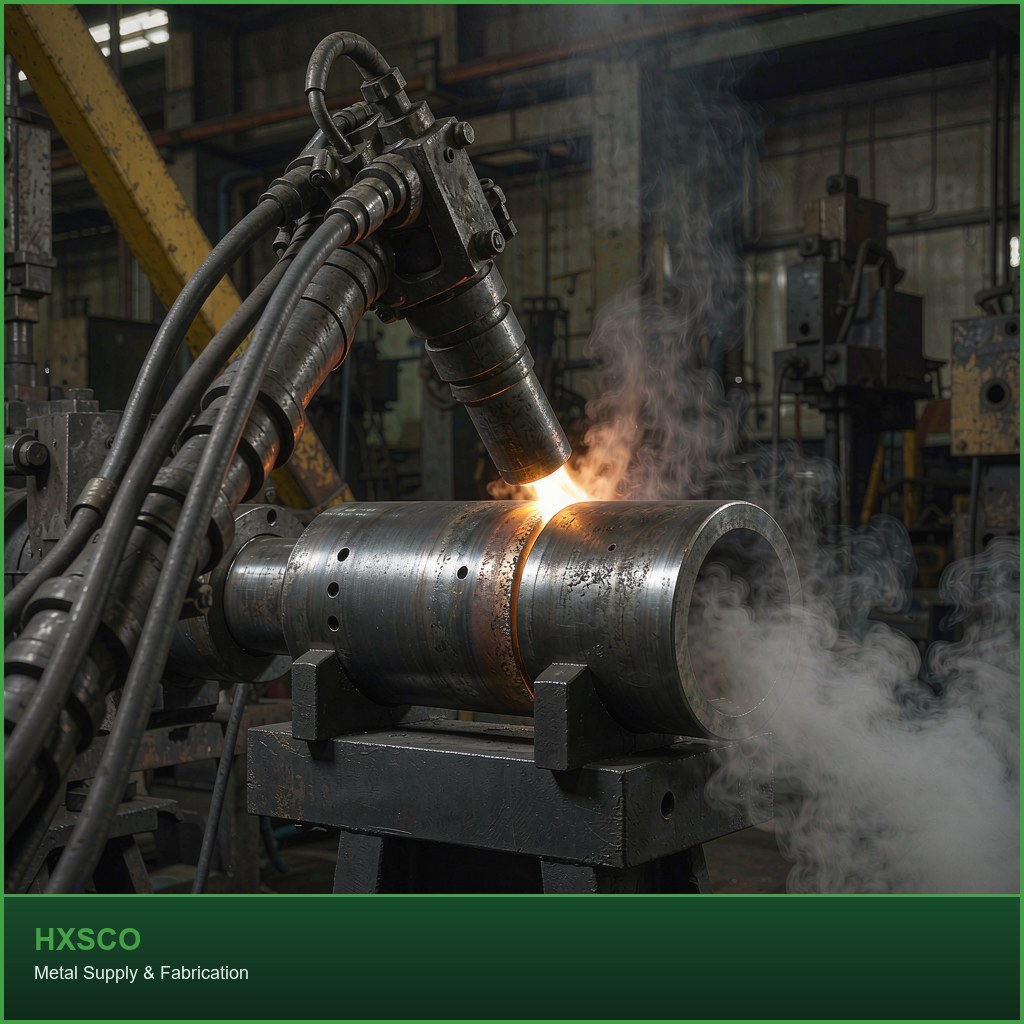
Short answer: Flame hardening heats a steel surface with an oxy-fuel torch and quenches it in place, forming a thin, very hard martensitic case while the core stays tough — a low-cost way to add wear resistance to gears, rails, slides and rolls exactly where needed. It suits medium-carbon and cast steels and large parts that would be costly to furnace-harden, and pairs with induction and laser hardening for different geometries and volumes.
At a Glance
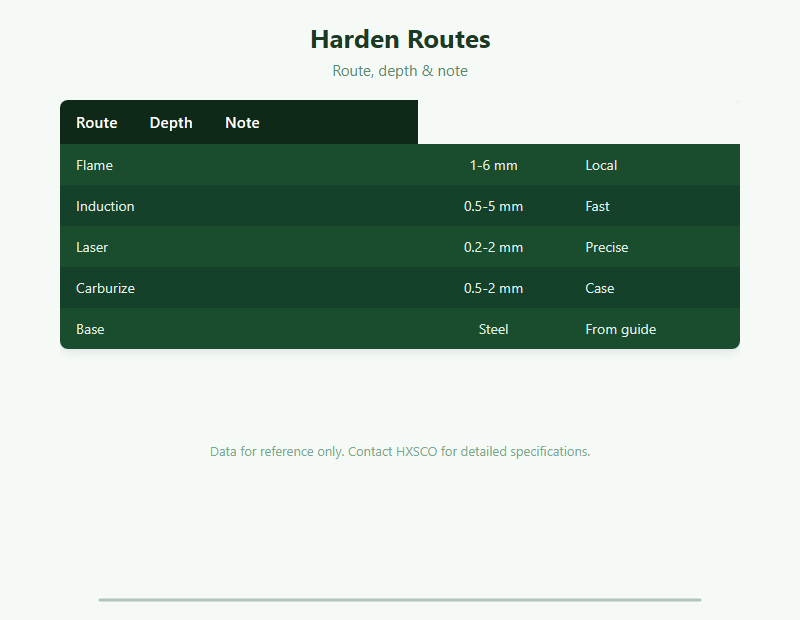
Hardening Routes
Compare Metal Induction Hardening Guide y Metal Laser Welding Guide; relate to Nitriding Vs Carburizing y Metal Martensite Guide.
Calidad
Case depth and hardness checked by Metal Hardness Testing Methods, certified by Mill Test Certificate Guide. Stock from Carbon Steel Supplier y Tool Steel Supplier.
Supply & QA
Protect hardened parts via How To Prevent Metal Rust. HXSCO supplies hardenable steel to spec.
Get a Quote
Tell HXSCO your requirements and we will respond with a competitive quote and lead time.
Preguntas frecuentes
Torch-heating + quench a steel surface for a hard case.
Flame is local/large parts; induction is faster/controlled.
Medium-carbon, cast and alloy steels (0.3-0.6% C).
Yes — only the heated skin becomes martensitic.
HXSCO supplies carbon/alloy steel for surface hardening.
Source Hardenable Steel from HXSCO
HXSCO supplies medium-carbon and alloy steel bar and plate suited to flame, induction and laser hardening. Send your grade for a quote.