


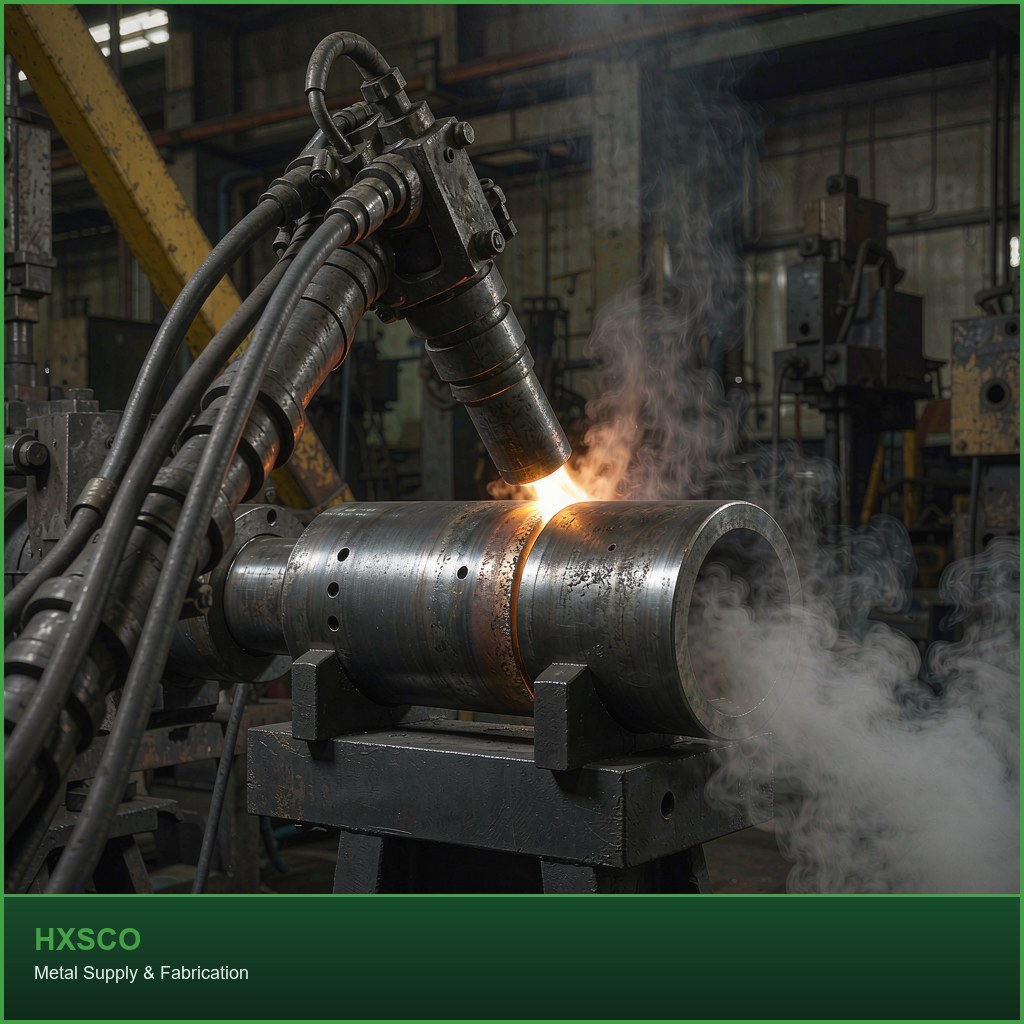
Short answer: Flame hardening heats a steel surface with an oxy-fuel torch and quenches it in place, forming a thin, very hard martensitic case while the core stays tough — a low-cost way to add wear resistance to gears, rails, slides and rolls exactly where needed. It suits medium-carbon and cast steels and large parts that would be costly to furnace-harden, and pairs with induction and laser hardening for different geometries and volumes.
At a Glance
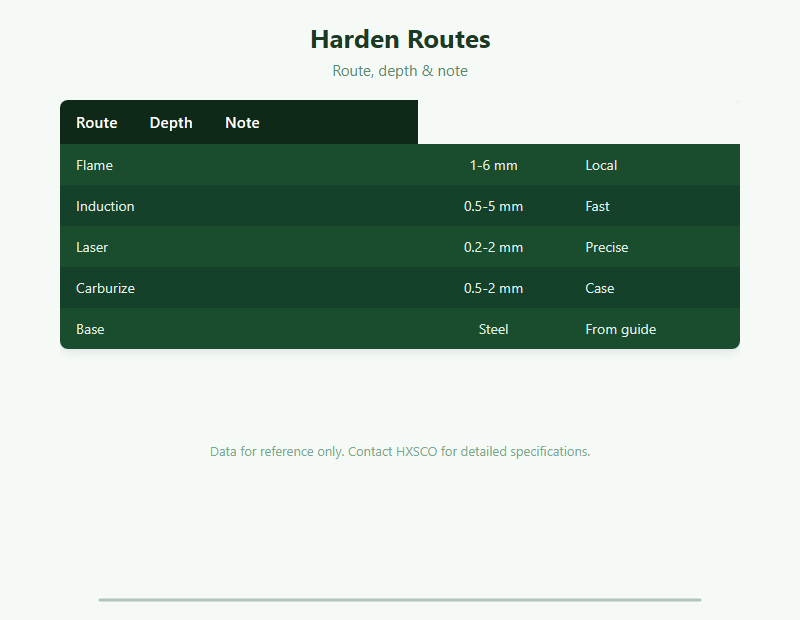
Hardening Routes
Compare Metal Induction Hardening Guide ve Metal Laser Welding Guide; relate to Nitriding Vs Carburizing ve Metal Martensite Guide.
Kalite
Case depth and hardness checked by Metal Hardness Testing Methods, certified by Mill Test Certificate Guide. Stock from Carbon Steel Supplier ve Tool Steel Supplier.
Supply & QA
Protect hardened parts via How To Prevent Metal Rust. HXSCO supplies hardenable steel to spec.
Get a Quote
Tell HXSCO your requirements and we will respond with a competitive quote and lead time.
Sıkça Sorulan Sorular
Torch-heating + quench a steel surface for a hard case.
Flame is local/large parts; induction is faster/controlled.
Medium-carbon, cast and alloy steels (0.3-0.6% C).
Yes — only the heated skin becomes martensitic.
HXSCO supplies carbon/alloy steel for surface hardening.
Source Hardenable Steel from HXSCO
HXSCO supplies medium-carbon and alloy steel bar and plate suited to flame, induction and laser hardening. Send your grade for a quote.