


Short answer: Cold forging shapes metal at room temperature by squeezing it in a die, giving tighter tolerances, better surface finish, higher strength from work hardening and almost no scrap — at the cost of higher press force.
At a Glance
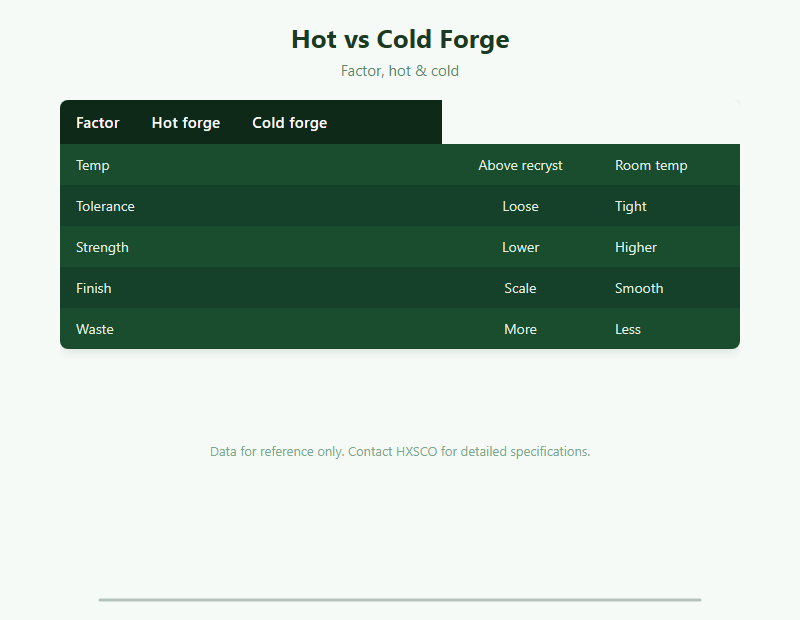
Cold vs Hot
Cold forging (our Forging Supplier line) skips scale and machining; hot forging (Casting Supplier counterpart) is for larger, complex shapes. Strength comes from Metal Strain Hardening Guide; envelope in Metal Tolerances Fits Guide y Metal Formability Guide.
Making It Work
Phosphate coat and lube the blank, size the press for the flow stress, and relieve stress afterward (Stress Relieving Vs Annealing); finish per Metal Machinability Guide and deburr (Metal Burr Deburring Guide).
QA & Supply
Find surface and internal flaws by Metal Ndt Guide and document per Mill Test Certificate Guide. HXSCO supplies forge-ready bar and billet.
Get a Quote
Tell HXSCO your requirements and we will respond with a competitive quote and lead time.
Preguntas frecuentes
Shaping metal in a die at room temperature, usually by squeezing or heading.
Work hardening and favourable grain flow raise strength and fatigue life.
The billet is sized to the part, so almost no material is removed.
Higher press force and lower formability than hot forging, so simpler or smaller parts.
HXSCO supplies bar and billet sized for cold forging.
Source Forge-Ready Stock from HXSCO
HXSCO supplies bar and billet sized for cold forging and tight tolerances. Send your grade and quantity for a quote.