



Short answer: Rolling-element bearings use through-hardened bearing steel rings and balls for hardness and fatigue life, stainless bearing steel for corrosion duty, brass or polymer cages to guide rolling elements, bronze thrust washers for wear, and cast iron or aluminium housings for support, all chosen for hardness, fatigue resistance and dimensional stability under load.
At a Glance
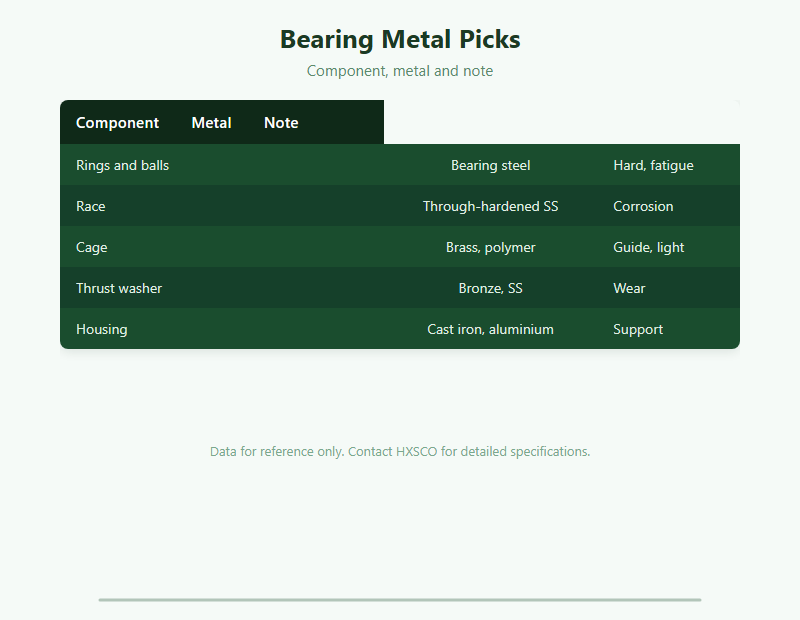
What Bearings Need
Hardness and fatigue lead the choice, with detail in our Hardness Comparison Guide and fatigue notes in our Metal Fatigue Guide; the strength basis is in our Metal Strength Comparison.
Rings and Rolling Elements
Rings and balls are bearing steel and stainless race for corrosion, with hardening in our Heat Treatment Guide and testing in our Hardness Testing Guide.
Cages and Housings
Cages use brass or polymer and housings use cast iron or aluminium, with the cast basis in our Cast Iron vs Steel Guide and the brass basis in our Brass Supplier.
Quality and Sourcing
Bearing parts are checked by inspection, with methods in our Quality Inspection Guide und Non-Destructive Testing Guide; buyers confirm grade via our Mill Test Certificate Guide and pack per our Export Packing Guide.
Get a Quote
Tell HXSCO your requirements and we will respond with a competitive quote and lead time.
Häufig gestellte Fragen
Through-hardened bearing steel for hardness and fatigue.
Stainless bearing steel races and balls resist corrosion.
Brass guides rolling elements and runs quietly with oil.
Cast iron or aluminium housings support and locate bearings.
Confirm grade and certificate, then pack moisture-safe for export.
Source Bearing Metal with HXSCO
HXSCO supplies bearing steel, stainless, brass and cast stock for rings, cages and housings. Send specs for a quote.