


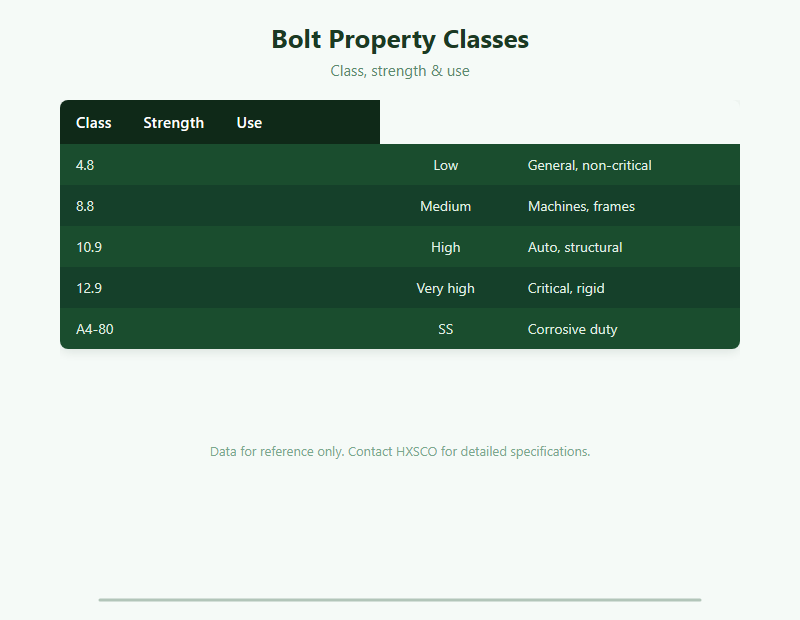
Short answer: Bolted joints carry load through clamping force, not bolt tension; the torque you apply is only a proxy for the preload that compresses the joint. Correct class, lubrication and torque control keep the bolt below its proof load so the joint stays tight under vibration and shock.
At a Glance
Preload, Not Torque
The bolt is a spring: tighten it to a target preload (typically 0.6–0.75 of proof load) and friction holds the joint. Selection ties to Metal Tolerances Fits Guide, Carbon Steel Vs Alloy Steel und Edelstahlsorten erklärt; our Fasteners Supplier line covers the grades.
Avoiding Joint Failure
Under-tightening lets the joint slip and fatigue; over-tightening yields the thread. Mind Stress Concentration Guide at the nut face, relieve stress via Stress Relieving Vs Annealing, and design for Metal Fatigue Endurance Limit und Metal Residual Stress Guide.
QA & Supply
Document grade and coating per Mill Test Certificate Guide, inspect threads by Metal Ndt Guide, and pick corrosion-rated fasteners via How To Prevent Metal Rust. HXSCO supplies bolts and studs in the classes above.
Get a Quote
Tell HXSCO your requirements and we will respond with a competitive quote and lead time.
Häufig gestellte Fragen
Torque is a proxy for the clamping preload that compresses the joint and carries the load by friction.
Class 8.8 or 10.9 is typical; 12.9 only where rigidity and high strength are required.
Under-tightening, vibration and joint settling drop preload below the slip threshold.
A4-80 stainless or a coated high-strength class selected for the environment.
HXSCO supplies bolts, studs and nuts in 4.8 through 12.9 and A4 stainless.
Source Fasteners from HXSCO
HXSCO supplies bolts, studs and nuts in classes 4.8–12.9 and A4 stainless with certificates. Send your spec and quantity for a quote.