



Short answer: Cold-chamber die casting ladles molten metal into a separate injection chamber each cycle, allowing high-melting alloys such as aluminum and copper to be cast into accurate parts; the alternative is explained in our Hot-Chamber Guide and the family in our Die Casting Guide.
At a Glance
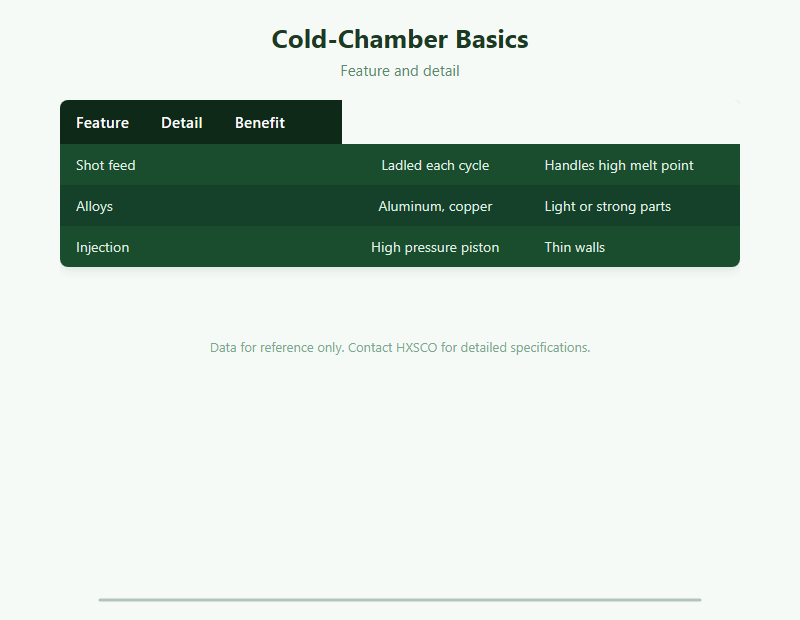
How the Cold-Chamber Works
Molten metal is held in a furnace, ladled into the shot chamber, then a piston injects it into the die at high pressure; the process context is in our Die Casting Guide.
Alloys for Cold-Chamber
Aluminum A380 and ADC12, copper and brass, and some magnesium grades are typical; see our Alloys Guide und Aluminum Guide.
Vorteile
High-melting alloys, good mechanical properties and thin-wall capability suit structural and lightweight parts; compare routes in our Die vs Sand Casting Guide.
Cycle and Cost Considerations
Ladling each shot makes the cycle slower than hot chamber, but tooling life and part value often justify it; planning is in our Price Quotation Guide.
Typische Anwendungen
Automotive housings, wheels, 3C shells and pump bodies; the duty context is in our Automotive Guide.
Quality and Finishing
Porosity control is covered in our Defects Guide, inspection in our Inspection Guide and finishing in our Finishing Guide.
Get a Quote
Tell HXSCO your requirements and we will respond with a competitive quote and lead time.
Häufig gestellte Fragen
Aluminum, copper and some magnesium alloys.
Aluminum would attack the immersed mechanism and melts too hot.
Yes, because each shot is ladled separately.
Auto housings, wheels and 3C shells.
Yes – see our die casting supplier page.
Get a Cold-Chamber Quote
HXSCO supplies aluminum and copper cold-chamber die castings with tooling, machining and certificates. Send your drawing and volume for a quote.