


Short answer: Metal wear is the progressive loss of material from surfaces in contact; the four classic mechanisms — adhesive, abrasive, erosive and fatigue (plus fretting) — each have distinct causes and controls, so identifying the mode is the first step to selecting the right material, hardness and lubrication.
At a Glance
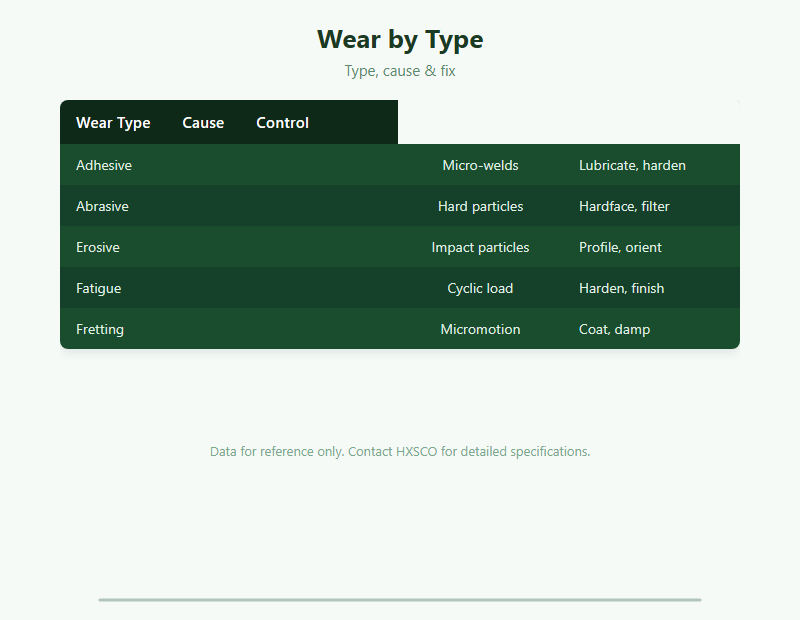
The Four Wear Modes
Adhesive wear happens when microscopic welds form and tear between sliding surfaces; abrasive wear is cutting by hard particles; erosive wear is impact by slurry or grit (see Metal Cavitation Guide for the bubble form); fatigue wear is sub-surface cracking from repeated load. Fretting is the micromotion cousin covered in Metal Fretting Corrosion Guide. Together they decide component life alongside Metal Hardfacing Guide e Metal Surface Treatment Guide.
Material & Hardness Selection
Harder, work-hardened or carburised surfaces resist abrasive and adhesive wear — context in Nitriding Vs Carburizing, Stress Relieving Vs Annealing e H13 Vs D2 Tool Steel; compare Wear Resistant Steel Supplier e Boron Steel Guide. Strength margins come from Yield Strength Vs Tensile Strength e Metal Machinability Guide; finishing per Surface Roughness Ra Guide reduces nucleation.
Lubrication, Design & QA
Separate surfaces with lubricant or coating (Anodizing Vs Powder Coating, Anodizing Vs Electroplating), filter abrasives, and design for hydrodynamic films. Confirm condition with Metal Hardness Testing Methods e Metal Ndt Guide, document per Mill Test Certificate Guide, and read failures via Metal Failure Analysis Guide.
Get a Quote
Tell HXSCO your requirements and we will respond with a competitive quote and lead time.
Perguntas frequentes
Adhesive, abrasive, erosive and fatigue wear, with fretting as a micromotion variant — each has a different cause and control.
Abrasive wear removes material fastest in dirty duty; adhesive wear dominates in poorly lubricated sliding contacts.
Harden or hardface the surface, filter/clean the abrasive stream, and choose a harder counterface than the particles.
Higher hardness helps against abrasive and adhesive wear, but very hard brittle surfaces can crack under impact fatigue; match to the mode.
HXSCO supplies wear plates, hardened strip and abrasion-resistant steels with properties documented per your duty.
Source Wear-Resistant Metal from HXSCO
HXSCO supplies hardened, abrasion-resistant and wear-plate steels with documented properties for sliding and slurry duty. Send your duty, grade and quantity for a quote.