


Short answer: The hydrogen economy relies on 316L and 304L stainless for electrolysis and storage, nickel alloys for wet H2 service, and embrittlement-resistant steels for pipelines and pressure vessels, so material choices target purity and hydrogen compatibility; our Corrosion Resistance Guide e Nickel Alloy Supplier give the detail.
At a Glance
Electrolysis and Storage
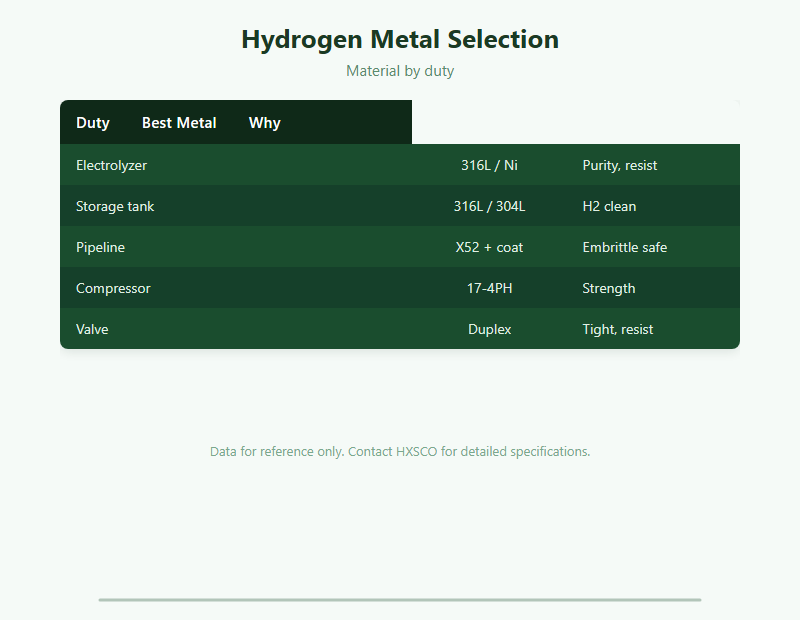
Electrolyzer frames and tanks use Stainless Steel Supplier 316L and Nickel Alloy Supplier, with corrosion notes in our Corrosion Resistance Guide and the chemical basis in our Chemical Processing Guide.
Pipelines and Pressure Vessels
Transport uses controlled-steel grades with embrittlement testing, with strength data in our Comparação de forças and heat treatment in our Heat Treatment Guide; certification is in our Mill Test Certificate Guide.
Valves and Compressors
High-pressure parts use Duplex Stainless Supplier and 17-4PH, discussed in our Aerospace Guide e Quality Inspection Guide.
Procurement Tips
Specify hydrogen-service testing and pack per our Export Packing Guide.
Get a Quote
Tell HXSCO your requirements and we will respond with a competitive quote and lead time.
Perguntas frequentes
316L and 304L stainless for clean, compatible storage.
Atomic hydrogen entering high-strength steel under load.
Controlled grades with embrittlement qualification.
Yes – for wet or high-purity hydrogen service.
Yes – with hydrogen compatibility and NDT reports.
Buy Hydrogen-Economy Metals from HXSCO
HXSCO supplies stainless, nickel alloy and embrittlement-resistant steel for electrolysis, storage and piping. Send spec and cert needs for a quote.