


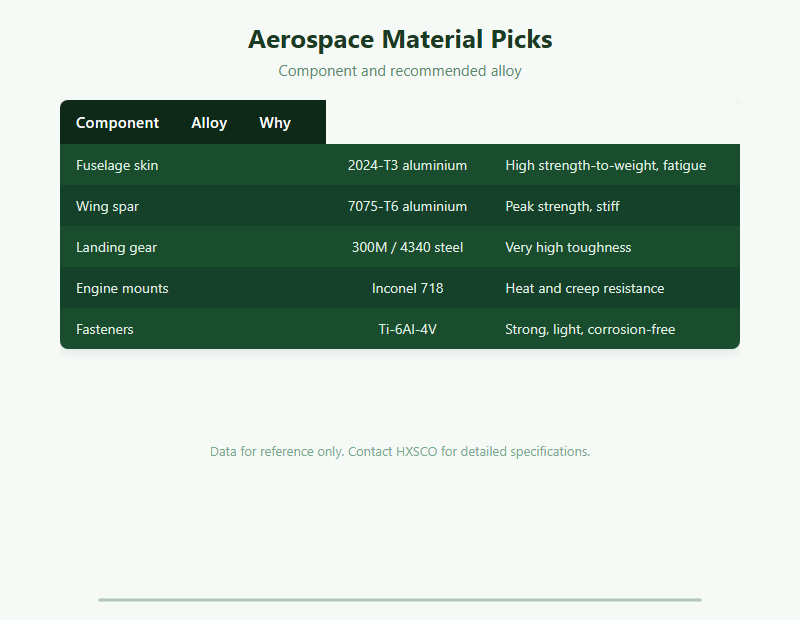
Short answer: Aircraft lean on a short list of qualified metals: 2024 and 7075 aluminium for skins and spars, titanium and Inconel for hot or fatigue-critical parts, and ultra-clean steel for landing gear, each supplied to aerospace material specifications with full traceability.
At a Glance
Why Aerospace Is a Metals Problem
Every kilogram saved in the air frame pays back across the life of the aircraft, so alloys are chosen for strength-to-weight first and then qualified for fatigue and corrosion. Our 7075 vs 6061, 2024 vs 7075 e 7075 Properties guides show the trade-offs buyers weigh.
Aluminium: The Workhorse
2024-T3 skins and 7075-T6 spars still dominate the primary structure because no other low-cost metal beats their strength-to-weight. Compare families in our Aluminium Alloy Series Guide; 6061 and 5083 appear in less critical structures — see 6061 Properties e 5083 Properties.
Titanium and Nickel Alloys
Titanium Ti-6Al-4V earns its place in fasteners and engine-adjacent parts through low density and corrosion immunity, while nickel alloys such as Inconel 718 hold strength hot — covered in our Titanium Grade 2 vs 5 e Inconel Supplier pages, with the creep angle in our Creep Guide.
Design Drivers: Fatigue, Creep and Toughness
Aircraft parts fail from cycles, not just load, so designers quote fatigue limits and fracture toughness, not just ultimate strength. Our Fatigue Guide, Fracture Toughness Guide e Vibration Fatigue Guide explain the numbers that gate qualification.
Specifying and Sourcing
Aerospace buyers specify alloy, temper, heat-treat and AMS or EN standard on the purchase order and expect mill test reports. Our How to Choose a Metal Supplier e Mill Test Certificate Guide cover what to put in an RFQ.
Get a Quote
Tell HXSCO your requirements and we will respond with a competitive quote and lead time.
Perguntas frequentes
2024-T3 for skins and 7075-T6 for spars and fittings, for strength-to-weight.
High strength-to-weight, corrosion immunity and good fatigue for fasteners and hot zones.
Inconel 718 for mounts and Inconel 625 for high-heat sections.
By AMS or EN specification with full mill test report and traceability.
We supply qualified alloys with mill certificate; confirm the exact spec on your RFQ.
Source Aerospace-Grade Metal from HXSCO
HXSCO supplies aircraft-grade aluminium, titanium and nickel alloys with mill certificate. Send your specification and quantity for a quote.