



Short answer: Tempering is the final heat-treat step that reheats quench-hardened steel to a moderate temperature, trading a little hardness for much-needed toughness and stability. Higher tempering temperature gives a softer, tougher part; lower keeps it hard and wear-resistant — the balance sets the part’s job.
At a Glance
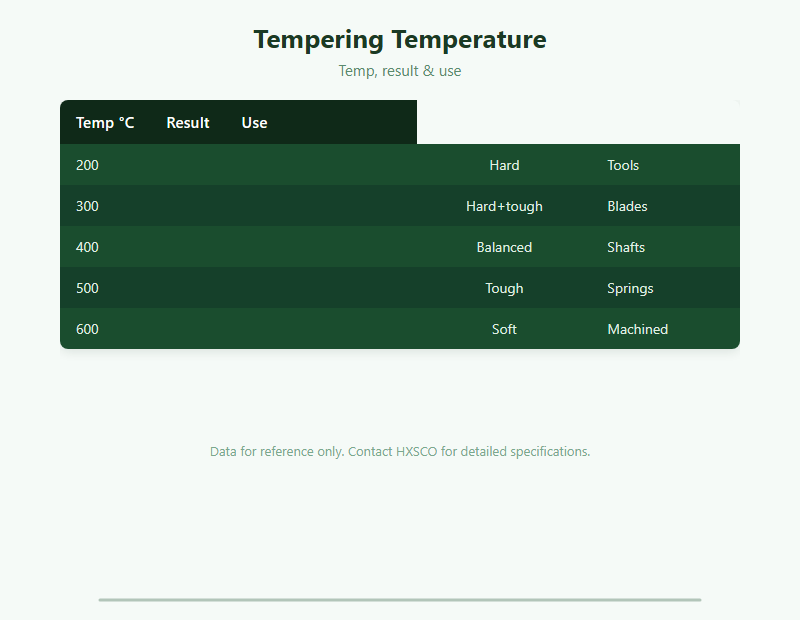
Setting the Balance
Tempering follows Metal Heat Treatment Guide and pairs with Annealing Vs Normalizing y Stress Relieving Vs Annealing. Refine structure via Metal Grain Size Guide and relate to Nitriding Vs Carburizing.
QA & Supply
Verify hardness and inspect via Metal Ndt Guide; document per Mill Test Certificate Guide. Protect stock via How To Prevent Metal Rust. HXSCO supplies tempered grades to spec.
Get a Quote
Tell HXSCO your requirements and we will respond with a competitive quote and lead time.
Preguntas frecuentes
Reheating quench-hardened steel to trade hardness for toughness.
Untempered martensite is too brittle and can crack in service.
Yes — higher tempering temperature lowers hardness, raises toughness.
Around 400-500°C, balancing strength and spring resilience.
HXSCO supplies steel tempered to your required hardness.
Source Tempered Steel from HXSCO
HXSCO supplies quenched-and-tempered steel at the hardness and toughness your part needs. Send your grade and quantity for a quote.