



Short answer: Tempering is the final heat-treat step that reheats quench-hardened steel to a moderate temperature, trading a little hardness for much-needed toughness and stability. Higher tempering temperature gives a softer, tougher part; lower keeps it hard and wear-resistant — the balance sets the part’s job.
At a Glance
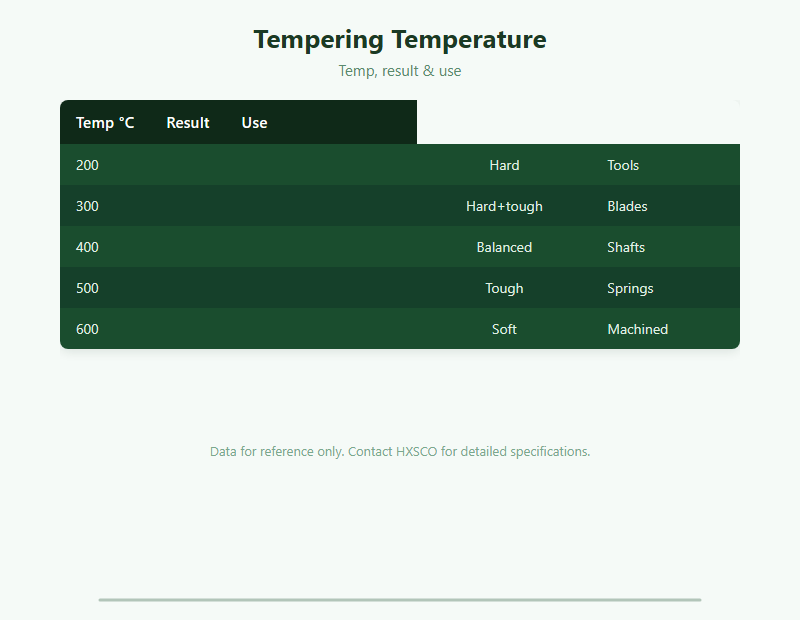
Setting the Balance
Tempering follows Metal Heat Treatment Guide and pairs with Annealing Vs Normalizing 그리고 Stress Relieving Vs Annealing. Refine structure via Metal Grain Size Guide and relate to Nitriding Vs Carburizing.
QA & Supply
Verify hardness and inspect via Metal Ndt Guide; document per Mill Test Certificate Guide. Protect stock via How To Prevent Metal Rust. HXSCO supplies tempered grades to spec.
Get a Quote
Tell HXSCO your requirements and we will respond with a competitive quote and lead time.
자주 묻는 질문
Reheating quench-hardened steel to trade hardness for toughness.
Untempered martensite is too brittle and can crack in service.
Yes — higher tempering temperature lowers hardness, raises toughness.
Around 400-500°C, balancing strength and spring resilience.
HXSCO supplies steel tempered to your required hardness.
Source Tempered Steel from HXSCO
HXSCO supplies quenched-and-tempered steel at the hardness and toughness your part needs. Send your grade and quantity for a quote.