


Short answer: Bimetallic strip and clad metal combine two metals so each contributes its best property — corrosion resistance, conductivity or cost on one side, strength or economy on the other — for thermostats, cladding, contacts and reactive-service parts.
At a Glance
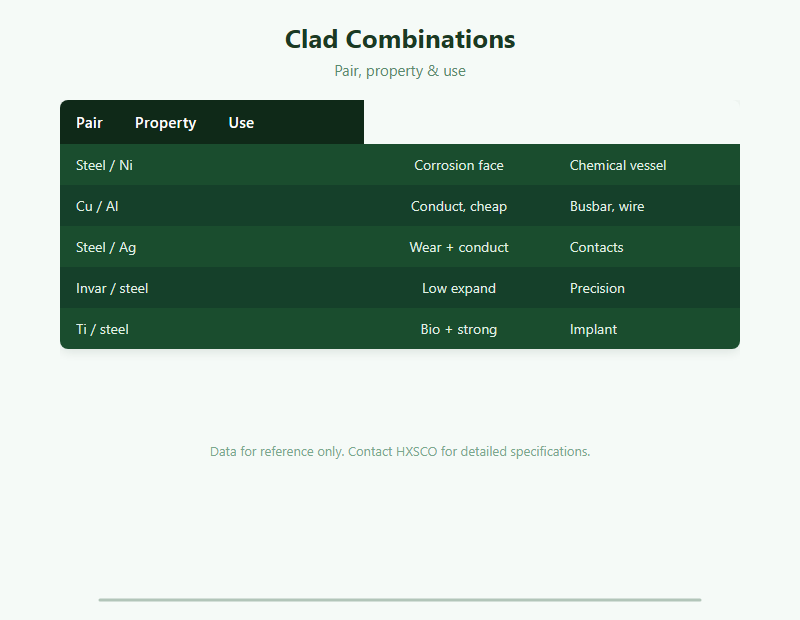
How Bimetals Are Made
Explosion, roll-bond or Metal Diffusion Bonding Guide joins the layers into one composite; roll cladding is related to Metal Cladding Facades and heavy plate from Steel Plate Supplier. The bond must survive thermal cycling — tie to Thermal Expansion Of Metals y Metal Thermal Fatigue Guide.
What They Do
The classic bimetallic strip bends with temperature (thermostats) because the two metals expand differently (Thermal Expansion Of Metals); clad plate puts stainless or nickel against corrosion while steel carries load (Stainless Steel Supplier, Nickel Alloy Supplier); Cu/Al clad cuts cost in Busbar Copper Vs Aluminum.
Design, QA & Supply
Check bond shear, thickness and corrosion face; verify with Metal Ndt Guide y Tensile Test Guide, document per Mill Test Certificate Guide. HXSCO supplies clad and bimetallic stock for your service.
Get a Quote
Tell HXSCO your requirements and we will respond with a competitive quote and lead time.
Preguntas frecuentes
Two metals bonded so they bend when heated because they expand by different amounts — used in thermostats.
By explosion, roll-bonding or diffusion bonding two metals into one composite plate or strip.
Vessels and tanks needing a corrosion-resistant face (stainless/nickel) over a strong, economical steel backing.
Yes — it gives copper conductivity where it matters at a lower aluminium-backed cost.
HXSCO supplies clad and bimetallic strip and plate with documented bond and thickness.
Source Clad & Bimetal from HXSCO
HXSCO supplies clad plate, bimetallic strip and composite stock with documented bond and corrosion face. Send your pair, gauge and quantity for a quote.